KNAI THOMMAN CENTER

The Knanaya Tradition of Endogamy: A Biblical Perspective

The Knanaya community has traditionally practiced endogamy, preserving its distinct heritage, faith, and identity through marriage within the community. Supporters of this tradition often point to examples from the Holy Bible where the patriarchs of Israel sought spouses from among their own kin and covenant community rather than from surrounding peoples. The following biblical passages are frequently cited in this context.

Abraham and Sarah: Marriage Within the Family Line

According to Scripture, Abraham and Sarah were related by blood. When Abraham explained his relationship with Sarah, he said:

“Besides, she really is my sister, the daughter of my father though not of my mother; and she became my wife.”
— Genesis 20:12

Abraham was called by God out of Mesopotamia (Genesis 12:1-5), the land associated with his ancestral family. Those who support Knanaya endogamy see in Abraham’s marriage an example of maintaining family and covenant continuity within a common lineage.

One of the clearest biblical examples is Abraham’s command concerning the marriage of his son Isaac. Abraham specifically instructed his servant not to choose a wife from among the Canaanites but to return to his own people and family.

“You will not get a wife for my son from the daughters of the Canaanites… but will go to my country and to my kindred, and take a wife for my son Isaac.”
— Genesis 24:3-4

The servant obeyed Abraham’s instruction and brought Rebekah, who belonged to Abraham’s extended family (Genesis 24:15, 24, 67). This is often interpreted as a deliberate effort to preserve the covenantal and familial identity entrusted by God.

The same principle was passed to the next generation. Isaac instructed Jacob not to marry from among the Canaanites but to seek a wife from his relatives.

“You shall not marry one of the Canaanite women. Arise, go to Paddan-aram to the house of Bethuel your mother’s father, and take as wife from there one of the daughters of Laban your mother’s brother.”
— Genesis 28:1-2

Jacob obeyed and married Leah and Rachel, daughters of Laban, his mother’s brother (Genesis 29:15-30).

The patriarchs were concerned not merely with ethnic or biological ties but with preserving the covenant relationship with God. Marrying within the family and faith community helped maintain religious beliefs, customs, and obedience to God’s covenant.

The Bible repeatedly warns Israel against marriages that could lead God’s people away from their faith:

“Do not intermarry with them… for they would turn away your children from following me.”
— Deuteronomy 7:3-4

This emphasis on preserving faith and covenant identity is often viewed as a biblical foundation for communities seeking to maintain their distinctive spiritual and cultural heritage.

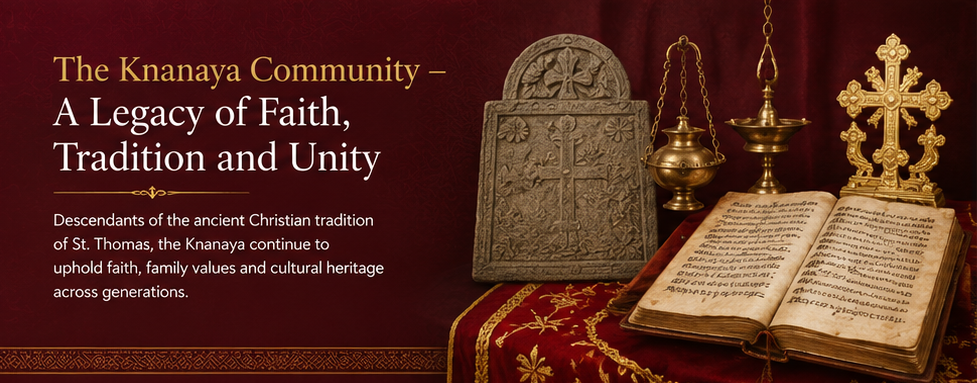
The Knanaya people traditionally trace their origins to Christian migrants from Mesopotamia who arrived in India under the leadership of Thomas of Cana. Just as Abraham’s family originated from Mesopotamia and sought to preserve its covenant identity through marriages within the kinship group, many Knanaya Christians view their endogamous tradition as a means of preserving the unique heritage, faith, and communal identity handed down by their ancestors.

Biblical supporters of Knanaya endogamy point to the examples of Abraham, Isaac, and Jacob, who sought spouses from within their own family and covenant community. Passages such as Genesis 20:12, Genesis 24:3-4, and Genesis 28:1-2 demonstrate a recurring pattern among the patriarchs of preserving familial and covenant continuity. For the Knanaya community, these biblical examples are understood as supporting the longstanding tradition of maintaining their distinct religious and cultural identity through endogamy.

At the same time, Christians generally recognize that salvation and membership in the Church are open to all people through Christ (Galatians 3:28), and interpretations regarding the application of these Old Testament examples to contemporary marriage practices may differ among Christian traditions.

A Sacred Home for Faith, Fellowship, Leadership, and Community

Nestled in the peaceful surroundings of Dover, Florida, Knai Thomman Center stands as a spiritual and cultural landmark for Knanaya people around the world. Inspired by divine revelations through Jesus Christ and Mother Mary, this blessed center was established to strengthen faith, preserve heritage, and unite generations under God’s guidance.

A Vision Born Through Divine Inspiration

Knai Thomman Center was founded through a spiritual calling inspired by Jesus Christ and Mother Mary. The center officially began on August 15th, the Feast of the Assumption of Mother Mary, marking the beginning of a unique mission dedicated to faith, leadership, and community.

A significant spiritual milestone occurred during a fasting (Thapasu) retreat when many participants witnessed an appearance of Mother Mary on February 11, 2017, affirming the sacred nature of this holy place and strengthening the faith of countless believers.

Today, Knai Thomman Center serves as a place of worship, renewal, fellowship, and spiritual growth for Knanaya people from across the globe.
Knanaya News

A Place for Prayer and Spiritual Renewal

Patron of Leadership

The church and worship center are dedicated to St. Knai Thomman, the patron of leadership. According to the spiritual revelation received through Mother Mary, this holy center was entrusted to carry his name and legacy.

The center provides a dedicated worship space along with residential, office, and counseling facilities for priests and pastors serving the community.

Strengthening Faith Every Day

Knai Thomman Center is a living spiritual community where prayer and fellowship continue throughout the week.

Whether seeking spiritual healing, personal reflection, or community fellowship, visitors find peace and renewal within this sacred environment.

Join Us

Experience a place where faith comes alive, community grows stronger, and traditions are passed on to future generations.

“Knai Thomman Center — A Blessed Home for God’s Own Chosen People.”