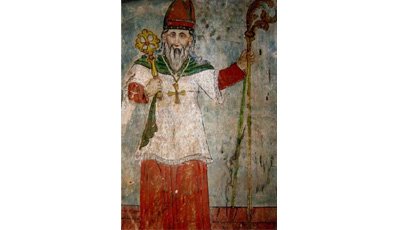
Mar Timothy I served as the Patriarch of the Church of the East from A.D. 780 to 823. He is widely regarded as one of the most distinguished and influential patriarchs in the history of the East Syriac Church. His long patriarchate of forty-three years marked a period of remarkable growth, theological scholarship, and missionary expansion.
Major Contributions
- Elected Patriarch in A.D. 780, Mar Timothy I led the Church of the East until his death in 823, serving for approximately 43 years.
- During the Abbasid Caliphate, he established Baghdad as the principal center of the Church’s administration.
- He vigorously promoted missionary activity throughout India, China, Central Asia, and Tibet, strengthening the Church’s presence across Asia.
- He authored numerous letters and treatises on theology, biblical studies, canon law, and ecclesiastical administration.
- His celebrated theological dialogue with the Abbasid Caliph Al-Mahdi remains one of the most significant examples of Christian-Muslim intellectual engagement in the early medieval period.
- Historical records indicate that he maintained correspondence with the Christians of India and addressed matters concerning the administration of the Malankara (Malabar) Church.
Biographical Information
- Birth: Approximately A.D. 727–740 (the exact year is unknown)
- Patriarchate: A.D. 780–823
- Seat: Baghdad
- Church: Church of the East (East Syriac Church)
- Historical Period: The Golden Age of the Abbasid Caliphate
Relationship with the Church in India
Mar Timothy I maintained close ecclesiastical ties with the St. Thomas Christians of India. Historical sources indicate that bishops continued to be sent from the Church of the East to the Malabar Church during his patriarchate.
His surviving letters discuss the administration of the Church in India, including the appointment of metropolitans and other ecclesiastical matters. These documents demonstrate the importance of the Indian Church within the wider structure of the Church of the East.
Historical Significance
Mar Timothy I is remembered as one of the greatest patriarchs of the Church of the East. His leadership strengthened the Church’s missionary outreach, theological scholarship, educational institutions, and ecclesiastical administration. Under his guidance, the Church flourished across Asia, extending its influence from Mesopotamia to India, Central Asia, China, and beyond.
Even today, historians regard Mar Timothy I as one of the principal architects of the medieval Church of the East and one of the most influential Christian leaders of the eighth and early ninth centuries.
The Relationship Between Mar Timothy I and Knai Thoma (Thomas of kana)
From the standpoint of historical evidence, there is no contemporary record establishing a direct relationship between Mar Timothy I (A.D. 780–823) and Knai Thoma (Thomas of Cana). However, both occupy significant places in the history of the Knanaya community and the Malabar Church, albeit in different historical periods.
Difference in Historical Period
According to the Knanaya tradition, Knai Thoma (Thomas of Cana) was a merchant and community leader who arrived in Kerala from Persia around A.D. 345 (although some traditions propose different dates). He is traditionally associated with the migration that strengthened the Christian community in Malabar.
Mar Timothy I, on the other hand, served as Patriarch of the Church of the East from A.D. 780 to 823, more than four centuries after the traditional migration of Knai Thoma.
An Indirect Relationship
Although they were separated by more than 400 years, Mar Timothy I was the spiritual head of the Church with which the descendants of Knai Thoma were traditionally associated.
During his patriarchate:
- The Malabar Church, including the Knanaya community according to its tradition, remained in ecclesiastical communion with the Church of the East.
- The Patriarch was responsible for appointing or sending bishops to India.
- He maintained correspondence concerning the administration of the Church in India.
- His letters demonstrate the continuing relationship between the Patriarchate and the Church of Malabar.
Thus, while Mar Timothy I had no direct personal connection with Knai Thoma, he exercised spiritual leadership over the Church that had inherited the tradition associated with Knai Thoma.
Relationship with the Knanaya Community
According to Knanaya tradition, the community established by Knai Thoma maintained continuous ecclesiastical ties with the Church of the East. Throughout the centuries, bishops from Mesopotamia continued to visit or serve the Malabar Church.
The patriarchate of Mar Timothy I represents one important stage in this long-standing relationship between the Church of the East and the Christian community of Malabar.
What History Confirms
Modern historical sources confirm that:
- Mar Timothy I corresponded with the Church in India.
- India was recognized as an important ecclesiastical province of the Church of the East during his patriarchate.
- He dealt with matters relating to the appointment of bishops and the administration of the Indian Church.