The principal sources for reconstructing the history and contents of the Knāyithomman Copper Plates include the ancient songs of the Knanaya community, the Pāṇan Pāttu (Panan Song), indigenous and foreign historical records, the Tharisappally Copper Plates and their later copies, and several traditional manuscripts. These sources contain numerous references to the royal grant of tax-free land and the seventy-two privileges conferred upon Knāyithomman by Cheraman Perumal.
Among these, the relationship between the Knāyithomman Copper Plates and the Tharisappally Copper Plates deserves special attention and will be examined separately in detail. The present discussion is therefore confined to the remaining sources that preserve the memory and tradition of the Knāyithomman charter.
Ancient Songs
The ancient songs of the Knanaya community constitute one of the earliest and most valuable sources for the study of the Knāyithomman Copper Plates. Several of these songs explicitly state that the land grant and the seventy-two privileges were formally recorded on copper plates and presented to Knāyithomman by Cheraman Perumal.
Among the songs that contain detailed references to the granting of the charter are:
- “Innu Nee Njangale Kaivitto Marane”
- “Munnam Malankara Pattu”
- “Vadimanam Vattakkalippattu”
- “Kottayam Cheriya Palliyude Pattu”
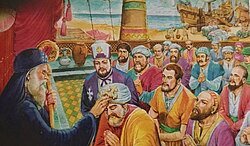
These compositions describe not merely the arrival of Thomas of Cana but also the royal audience before Cheraman Perumal, the presentation of gifts, the formal preparation of the copper plate charter, the grant of land for establishing churches and a settlement, and the conferment of the seventy-two privileges.
For example, Innu Nee Njangale Kaivitto Marane narrates that after presenting gifts to the king, Knāyithomman requested that the promised privileges be formally documented. Cheraman Perumal then ordered that the privileges be written on copper plates, granted tax-free land, and authorized the establishment of churches and a settlement.
Similarly, Munnam Malankara Pattu records that the king bestowed the ceremonial honours, royal musical instruments, processional privileges, and other distinctions upon Knāyithomman, directing that these privileges be engraved on copper plates as an everlasting royal grant, valid “as long as the sun and moon endure.”
Vadimanam Vattakkalippattu also refers to the writing of the copper plate charter, the construction of churches, the building of the town, and the conferment of the seventy-two privileges together with the ceremonial honours that accompanied them.
Likewise, Kottayam Cheriya Palliyude Pattu briefly records that, following discussions before the Chera ruler, the copper plates were prepared and a church and town were established.
Not all ancient songs explicitly mention the copper plates. Nevertheless, many of them clearly describe the land grants, ceremonial honours, musical privileges, royal insignia, and other customs traditionally associated with the charter. Songs such as Mangallyam Vattakkalippattu, Maravuran Methrante Pattu, Antham Charthunna Pattu, Mayilanchi Pattu, Nallororoshilam Vattakkalippattu, and Kottethu Kurishinte Pattu preserve numerous references to these privileges even though they do not specifically mention the copper plates.
The continued appearance of these royal honours in the ancient songs indicates that they were deeply rooted in the collective memory of the community. The author argues that it would have been practically impossible for such elaborate ceremonial privileges to become an integral part of Knanaya customs and songs without the support of an authoritative royal charter. Thus, even where the copper plates themselves are not explicitly mentioned, the songs preserve a living tradition that points to the existence of such a royal grant.
In the next section, I will translate Section 6.2 – The Panan Song, which contains one of the strongest traditional testimonies regarding the existence, contents, and even the stone copy of the Knāyithomman Copper Plates.
The Pāṇan Song
This section deals exclusively with the information relating to the Knāyithomman Copper Plates as preserved in the Pāṇan Pāttu (Pāṇan Song). The song presents the royal charter as a reward bestowed by Cheraman Perumal in recognition of the distinguished services rendered by Knāyithomman.
The Pāṇan describes the occasion through the following traditional verses:
“Come near, O Thomas of the Cheras;
I bestow upon you the golden crown.
The crown alone is not enough, O Thomas;
You shall also receive the honours that accompany the crown.”
The song then proceeds to enumerate the various privileges conferred by the king through the copper plate charter.
One of the most significant passages reads:
“With the Sun and the Moon, and Saint Mar Thoma the Apostle as witnesses, the charter was engraved upon copper. A copy was then inscribed on stone and placed at the northern entrance of Kodungallur, covered with a stone slab, so that even if future kings should examine it, no fault could ever be found with the rights granted to my Thomas.”
These verses are noteworthy because they refer not only to the original copper plate charter but also to a stone copy that was supposedly prepared and preserved. According to the song, this stone inscription was placed near the northern entrance of the Kodungallur temple precincts.
Whether or not such a stone copy actually existed cannot be established solely on the basis of the song. Nevertheless, the tradition itself is significant. It demonstrates that, at the time the song was composed, the Pāṇan believed not only in the existence of the copper plate charter but also in the desirability of preserving it permanently by engraving it on stone.
The reference further suggests that the charter was considered sufficiently important and authoritative to deserve reproduction on stone. The idea of preserving such a copy within the temple precincts also reflects the belief that it would thereby receive permanent protection and public recognition.
Thus, the Pāṇan Pāttu serves as an important traditional source supporting the existence, prestige, and enduring authority of the Knāyithomman Copper Plates. While it cannot by itself establish the historical authenticity of every detail, it provides valuable evidence for the place occupied by the copper plate charter in the collective memory and historical tradition of the Knanaya community.
The next section (Native Records) is especially important because it cites historical manuscripts from the 17th and 18th centuries, including the Carsaon copy, the Chunkom manuscript, Varthamanapusthakam, and other indigenous records that preserve traditions about the Knāyithomman Copper Plates.
Native Records
In addition to the ancient songs and the Pāṇan Pāttu, several indigenous historical records preserve valuable references to the Knāyithomman Copper Plates. Although these documents were compiled in different centuries and survive in various manuscript traditions, they consistently testify to the existence of a royal charter granted by Cheraman Perumal to Thomas of Cana and his followers.
The Carsaon Copy of the Tharisappally Charter
Before 1615, under the direction of Bishop Mar Ros, a Syriac-script Malayalam copy of the Tharisappally Copper Plates, commonly known as the Carsaon Copy, was prepared. This manuscript, discovered in the National Library of Paris by Fr. Kollaparambil, contains a Portuguese introduction describing it as a record of the privileges granted by Cheraman Perumal to the Christians.
The concluding section of this manuscript presents what is essentially a summary of the Knāyithomman Copper Plates, under the title “The Establishment of the City of Kodungallur.” It narrates that Thomas of Cana approached the Chera ruler, explained the commercial importance of the region, and requested land for establishing a Christian settlement. The king measured out tax-free land, granted numerous ceremonial privileges, authorized the construction of churches and a town, and confirmed these grants by issuing a copper plate charter witnessed by the Sun, the Moon, and the reigning ruler.
The Chunkom Manuscript
Another important witness is a traditional manuscript preserved for generations in the Pachikkara Tharakan family at Chunkom near Thodupuzha. Although the original palm-leaf manuscript is no longer available, three descriptions copied from it have been preserved in collections of ancient songs.
The first account attributes the grant to King Iravi Varma, describing how he confirmed seventy-two privileges together with ceremonial honours such as processional lamps, ceremonial garments, royal insignia, elephants, horses, musical ensembles, gateways, and various decorations. These privileges were declared hereditary, extending to the descendants of Thomas of Cana for as long as the Sun and Moon endure.
The second account again describes the establishment of Kodungallur as a Christian settlement, the measurement of land by the royal elephant measure, and the bestowal of numerous ceremonial honours, including umbrellas, banners, processional insignia, drums, conch trumpets, ceremonial fans, and other symbols of royal dignity. It concludes by stating that anyone who questioned the authenticity of these privileges could consult the authoritative stone record kept near the northern entrance of Kodungallur.
A third description provides an expanded catalogue of the privileges granted under the charter. It lists ceremonial ornaments, processional rights, musical instruments, banners, royal umbrellas, hunting privileges, military insignia, ceremonial swords, jewellery, royal crowns, decorative gateways, and numerous other honours associated with aristocratic status in medieval Kerala. According to the manuscript, these privileges were formally granted by Cheraman Perumal through a copper plate charter and confirmed by an inscription engraved on stone.
The Vettikkoottel Manuscript (1720)
Another significant indigenous source is the manuscript entitled “Events that Happened to the Syrians in Malayalam,” copied in 1720 by Vettikkoottel Mathai Kathanar, a priest belonging to the tradition of the Nestorian Metropolitan Mar Gabriel.
The manuscript narrates the arrival of Thomas of Cana from Edessa together with clergy, merchants, families, and settlers. After meeting the existing Christians of Kerala, Thomas presented his mission before Cheraman Perumal. The king welcomed the newcomers, granted land for building churches and a town at Kodungallur, and bestowed upon the Syrian Christians the royal honours and privileges that were engraved on copper plates. The author remarks that these copper plates were still visible in his own day.
Varthamanapusthakam
One of the earliest works of Malayalam travel literature, Varthamanapusthakam, written by Paremmakkal Thoma Kathanar between 1778 and 1786, also preserves the tradition of the Knāyithomman Copper Plates.
In its historical introduction, the work recounts the arrival of Thomas of Cana, his audience with Cheraman Perumal, the royal grant of land measured by the elephant measure, and the conferment of seventy-two privileges. It further states that these privileges were recorded in an official royal charter engraved on copper plates and that Mahodayapuram was thereafter established as a flourishing Christian settlement.
The Vadakara–Mecheril Palm-leaf Manuscript
Another valuable source is a palm-leaf manuscript formerly preserved by the Manalel (Mecheril) family of Vadakara near Thalayolaparambu. Scholars believe that this work is based upon an older historical narrative that was later expanded by the Puthenkoor tradition.
This manuscript contains a detailed account of the arrival of Thomas of Cana in Kerala, his meeting with Cheraman Perumal, and the royal reception accorded to the immigrants. It records that the king granted tax-free land for constructing churches and a town at Kodungallur and issued a copper plate charter confirming seventy-two hereditary privileges. The document also emphasizes that these privileges were to remain valid permanently, witnessed by the Sun and the Moon.
The manuscript further states that Thomas of Cana and his followers remained loyal to the Chera kingdom, rendering military and financial assistance whenever required. In recognition of these services, Cheraman Perumal commanded that neither they nor the seventeen associated occupational groups attached to their community should ever be deprived of the honours and privileges granted under the royal charter.
Historical Significance
Taken together, these indigenous records, although differing in language, chronology, and certain details, preserve a remarkably consistent tradition. They testify that Thomas of Cana received from Cheraman Perumal a royal grant of land together with hereditary honours and privileges, formally recorded on copper plates. While the original charter has not survived, these manuscripts constitute important documentary witnesses to the enduring historical memory of the Knāyithomman Copper Plates within the Knanaya tradition.