The Eparchy of Kottayam was erected exclusively for the Southist (Knanaya) Catholics in 1911. The Knanaya Community traces its origin from a group of Jewish-Christian emigrants from Southern Mesopotamia to the South Indian port of Cranganore in AD 345, who formed themselves into an endogamous community. They co-existed peacefully in the Indian nation and fulfilled their missionary purpose of re-invigorating the Church of St Thomas Christians. The original community consisted of about 400 persons belonging to 72 families of seven septs headed by Thomas of Kynai. A bishop by name Uraha Mar Yousef, four priests and several deacons were among them.
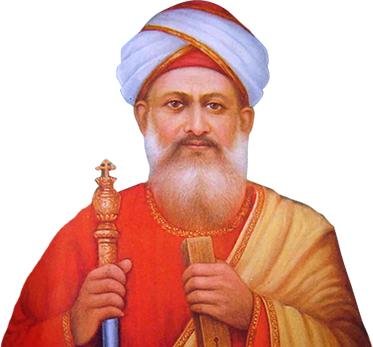
As the Catholicos of the East had promised the emigrants that he would send from time to time bishops to India, Uraha Mar Yousef had successors till the end of the 16th century. Under the East Syrian Bishops, the Knanaya Community had their own churches and priests distinct from those of the non-Knanaya St Thomas Christians. This system continued also under the Latin Rite European bishops, who governed the St Thomas Christians. When a ritual separation was effected for the Catholics in Kerala between the Orientals and Latins in 1887, all the Knanaya Catholics de facto were in the Apostolic Vicariate of Kottayam, and the Holy See ordered Bishop Charles Lavigne to appoint a separate Vicar General for the Knanaya Community. When the Vicariates Apostolic were re-organized into Trichur, Ernakulam and Changanassery and three indigenous bishops were appointed for the Syro-Malabarians in 1896 the bishop appointed for the Vicariate of Changanassery was Mar Mathew Makil, the former Vicar General for the Knanaya Community.
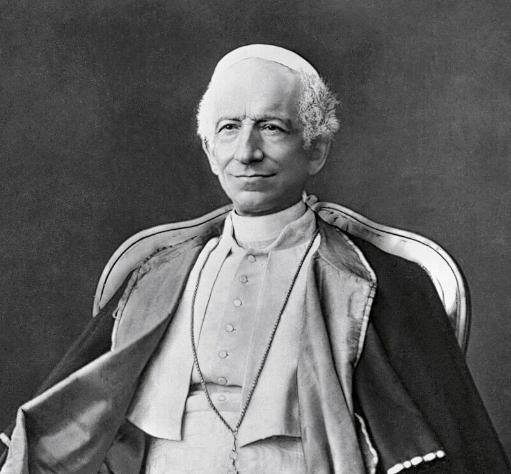
On August 29, 1911 a new Vicariate Apostolic of Kottayam was erected exclusively for the Knanaya Community by the Apostolic letter “In Universi Christiani” of His Holiness Pope St Pius X. On December 21, 1923 the Vicariate Apostolic of Kottayam was raised to an Eparchy by Pope Pius XI. When the territorial limits of the Syro-Malabar Church was extended in 1955, the jurisdiction of the Eparchy of Kottayam also was made co-extensive with the then extended territory of the Syro-Malabar Church.
On December 23, 2003. His Holiness Pope John Paul II made a sovereign decision that the status quo (pro gente suddistica) of the Eparchy of Kottayam must be maintained and left it to the Bishops’ Synod of the Syro-Malabar church to decide on the desired enhancement of the juridical status of the Eparchy of Kottayam. In November 2004 the synod gave its consent to elevate the Eparchy of Kottayam to the rank of a metropolitan see without a suffrogan eparchy. On March 21, 2005 the congregation for the oriental churches issued a letter of no-objection to the decision of the Bishop’s synod. Accordingly, on may 9, 2005 the Major Archbishop Mar Varkey Cardinal Vithayathil issued the decree
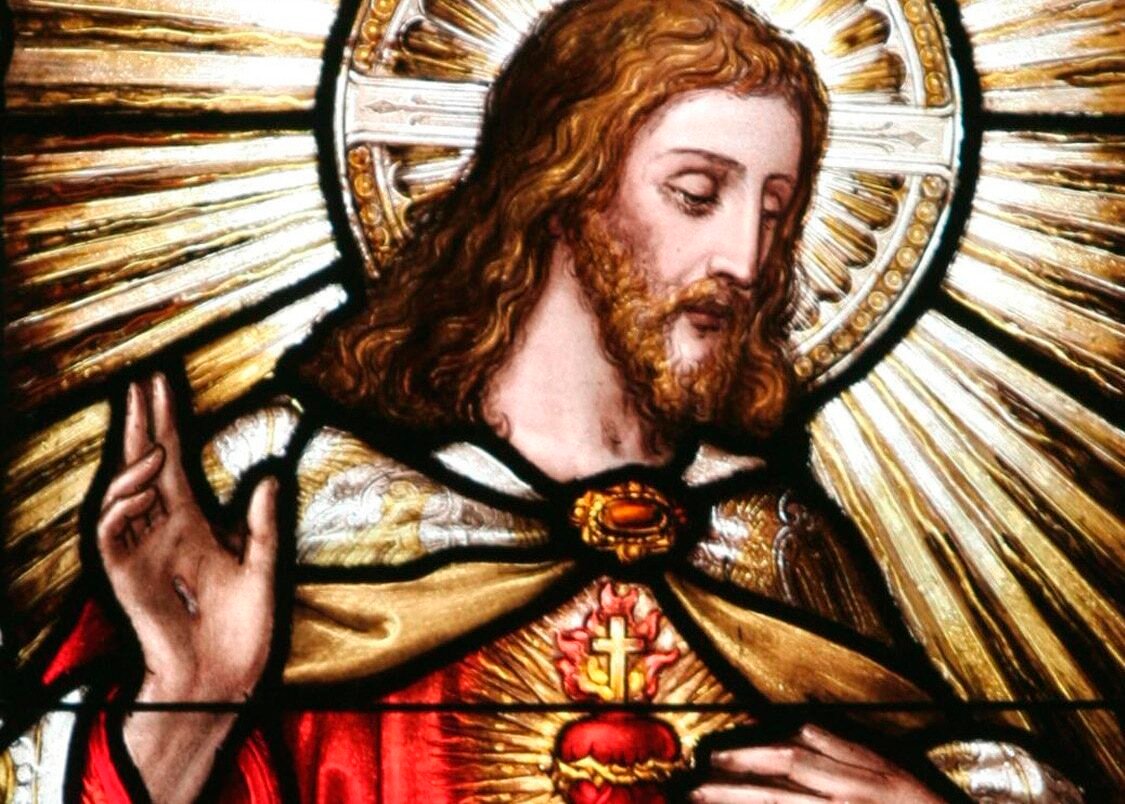
“The Eparchy of Kottayam” elevating the Eparchy of Kottayam to the rank of a metropolitan see, and another decree “God our loving father”, appointing Mar Kuriakose Kunnacherry as the first metropolitan of the newly erected metropolitan see of Kottayam. On June 3, 2005, the feast of the Most Sacred Heart of Jesus, at a liturgical service the Major Archbishop canonically erected the metropolitan see of Kottayam and ordained and enthroned Mar Kuriakose Kunnacherry as the first Metropolitan of Kottayam.
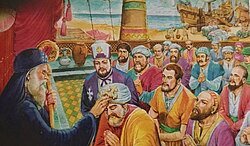
In the year 345 A.D., one Knai Thomman, a rich international merchant, and 72 families from Cana (Middle East), belonging to East Syrian Church (Chaldean), immigrated to Malabar (presently Kerala) and established their colony. In the group there were also priests, deacons and their bishop. Knai Thomman and his people were welcomed by Cheraman Perumal, the Emperor, and were given permission to settle down in Kodungalloor. They built a town in Kodungalloor with a church and 72 houses. The natives called it Mahadevar Pattanam meaning “town of superiors”. Later, Cheraman Perumal bestowed them with many princely privileges, and it was recorded on copper plates (Knai Thomman Cheppedu) given to Knai Thomman.
Knanaya Christians are the descendants of these Jewish Christian immigrants in Kerala. They were also called Southists (Thekkumbhagar) because they lived on the south side of Kodungalloor. The St. Thomas Christians (native Christians of Kerala) who lived on the north side of Kodungalloor were known as Northists (Vadakkumbhagar). Another tradition is that Knananites settled down on the south side of Periyar river while the native Christians lived on the north side of the river. It is also stated that Knananites were called Southists because they came from the southern kingdom of Judah.
Knanaya Christians are seen not only among the Catholics but also among the Orthodox Christians of Kerala, because when a group of Thomas Christians joined Jacobitism, among them there were Knanaya Christians too. They observe many rituals and traditions which are very peculiar to their own community. Even today, the Knananites continue to be an endogamous community.
In order to keep the purity of their race and ethnicity, they do not marry any one outside their community. They also keep away from evangelizing and converting others to Christianity. If anybody is converted to Christianity, such a person won’t be accepted in the community. Though this sense of “purity” is a distorted one, and is against basic Christian mission, it is acknowledged by Rome by establishing a separate diocese (Kottayam) for the Knanaya Catholics. A Knanaya Catholic can marry a Knanaya Jacobite, but cannot marry another Catholic even one who belongs to the same rite! It seems, Knananites are more proud of being Jewish than being “Christian.