The Knanaya community observes several distinctive customs and ceremonies associated with pregnancy, childbirth, and the birth of a child. One of the earliest is the Vayaru Kāṇal (pregnancy celebration), during which a variety of sweets and nutritious foods are prepared and served in honour of the expectant mother. During the seventh month of pregnancy, the woman is traditionally taken to her parental home for the birth of her first child. Before her departure, a special dish known as Pidi is prepared and shared with family members and relatives. The small rice dumplings that make up Pidi symbolically represent the hope for fertility and abundant offspring.
The custom of sending an expectant mother to her parental home for her first delivery reflects the community’s concern for her physical and emotional well-being. Surrounded by her parents and siblings rather than only by her young husband and his family, she receives greater care, affection, protection, and support during pregnancy and childbirth.
Following delivery, the mother traditionally refrains from attending church for approximately forty days. This practice is intended not as a religious restriction but as a period of rest and recovery for both mother and child. Although Sunday worship is a fundamental obligation for Christians, the Church exempts the new mother from attending Mass for at least six consecutive Sundays (approximately forty-two days), emphasizing the importance of providing dedicated care and attention to both mother and infant during the postpartum period.
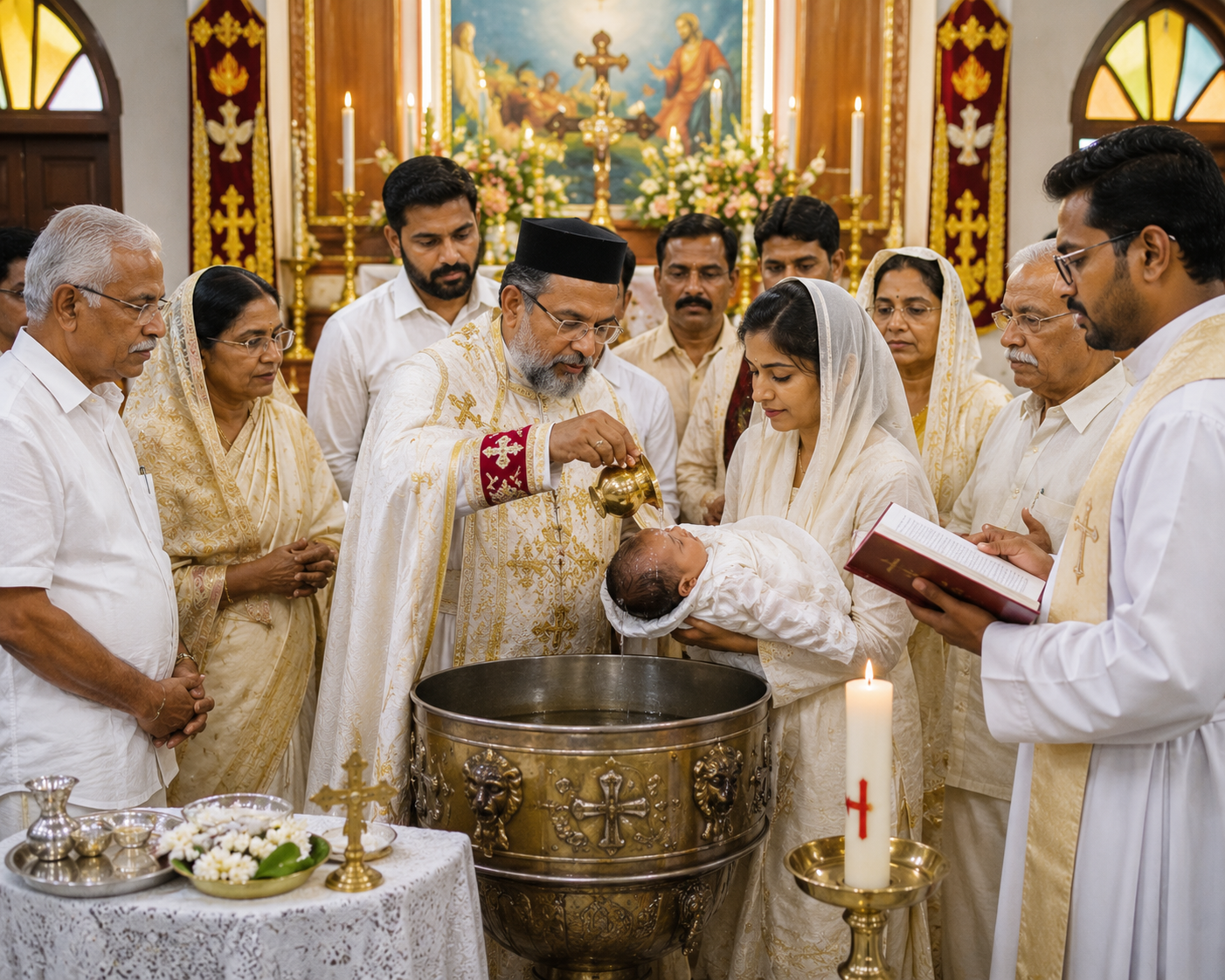
Several other customs accompany the birth of a child. Immediately after birth, a mixture of honey, vayambu (sweet flag), and powdered gold is traditionally touched to the infant’s tongue. Baptism is ordinarily administered on the eighth day after birth, signifying the child’s incorporation into the Christian community.
The naming of the child also follows a well-defined family tradition. Boys are customarily given the Christian names of their paternal grandfather followed by their maternal grandfather, while girls receive the names of their paternal grandmother followed by their maternal grandmother. The baptism of the first child is traditionally celebrated in the mother’s parish church, whereas the second child’s baptism is conducted in the father’s parish church. Likewise, the paternal grandparents customarily serve as the godparents (thalathottappan and thalathottamma) for the first child, while the maternal grandparents assume this role for the second child. These customs reflect the Knanaya community’s emphasis on preserving kinship ties, honoring ancestors, and maintaining a balanced relationship between both the paternal and maternal families.
ജനനം
ധാരാളം മധുരപലഹാരങ്ങളും പോഷകസമൃദ്ധമായ ആഹാരസാധനങ്ങളും ഉണ്ടാക്കി നല്കിയാണ് ക്നാനായര് ഗര്ഭസ്ഥസ്ത്രീകളുടെ വയറുകാണല് ചടങ്ങ് നടത്താറ്. ആദ്യപ്രസവത്തിനായി ജന്മഗൃഹത്തിലേക്ക് ഗര്ഭിണിയെ ഏഴാം മാസം കൂട്ടിക്കൊണ്ടു പോകുന്നു. പിടി എന്ന വിശിഷ്ട ഭക്ഷണം ഉണ്ടാക്കി എല്ലാവര്ക്കും നല്കിയാണ് പേറ്റിന് വിടുന്നത്. പിടിയിലെ ഉരുളകള് സന്താനസമൃദ്ധിയെ പ്രതീകാത്മകമായി അവതരിപ്പിക്കുന്നുണ്ട്. ആദ്യപ്രസവ ശുശ്രൂഷയ്ക്കായി പിതൃഗൃഹത്തിലേക്ക് ഗര്ഭിണിയെ അയയ്ക്കുന്ന പാരമ്പര്യത്തിനു പിന്നില് ചെറുപ്പക്കാരനായ ഭര്ത്താവിന്റെയും ഭര്തൃവീട്ടുകാരുടെയും സാന്നിധ്യത്തെക്കാള് സ്വമാതാപിതാക്കളുടെയും സഹോദരങ്ങളുടെയും അടുത്തായിരിക്കുന്നത്, ഗര്ഭിണിയായ സ്ത്രീക്ക് പ്രത്യേകസംരക്ഷണവും കരുതലും സുരക്ഷിതത്വബോധവും വാത്സല്യവും ശുശ്രൂഷയും ലഭിക്കുന്നു എന്നതാകാം. പ്രസവശേഷം സ്ത്രീകള് നാല്പത് ദിവസത്തോളം പള്ളിയില് പോകാതിരിക്കുന്നതും സ്ത്രീക്കും കുഞ്ഞിനും നല്കുന്ന പ്രത്യേക കരുതലിന്റെ ഭാഗമാണ്. ക്രിസ്ത്യാനിയെ സംബന്ധിച്ച് ഞായറാഴ്ച പള്ളിയില് പോകാന് കടമുള്ള ദിവസമാണ്. എന്നിട്ടും പ്രസവിച്ച വ്യക്തിക്ക് ആറു ഞായറാഴ്ചയെങ്കിലും (7ഃ6=42) അടുപ്പിച്ച് പള്ളിയില് പോകുന്നതില്നിന്നും ഒഴിവ് ലഭിക്കുന്നു. ഏറെ ഗൗരവത്തോടെ സ്ത്രീയെയും കുഞ്ഞിനെയും വീട്ടില് ശുശ്രൂഷിക്കണം എന്ന് ബോധിപ്പിക്കലാണിത്.
തേനും വയമ്പും സ്വര്ണവും അരച്ചുചേര്ത്ത മിശ്രിതം ജനിച്ചയുടനെ കുട്ടിയുടെ നാവില് നല്കുന്നത്, എട്ടാം ദിവസം മാമ്മോദീസ നല്കുന്നത്, മാമ്മോദീസയുടെ അവസരത്തില്, ആണ്കുട്ടികളെങ്കില് പിതാവിന്റെ അപ്പന് (വല്യപ്പന്), മാതാവിന്റെ അപ്പന്, പെണ്കുട്ടികളെങ്കില് പിതാവിന്റെ അമ്മ, മാതാവിന്റെ അമ്മ എന്നിവരുടെ ക്രിസ്തീയ പേരുകള് ക്രമപ്രകാരം കുട്ടികള്ക്ക് നല്കുന്നത്, ആദ്യകുട്ടിയുടെ മാമ്മോദീസ അമ്മയുടെ ഇടവകപ്പള്ളിയിലും രണ്ടാമത്തെ കുട്ടിയുടെ മാമ്മോദീസ അപ്പന്റെ ഇടവകപ്പള്ളിയിലും നടത്തുന്നത്, ആദ്യകുട്ടിയുടെ മാമ്മോദീസായ്ക്ക് പിതൃവഴിയിലെ വല്യപ്പനും വല്യമ്മയും രണ്ടാമത്തെ കുട്ടിയുടെ മാമ്മോദീസായ്ക്ക് മാതൃവഴിയിലെ വല്യപ്പനും വല്യമ്മയും തലതൊട്ടപ്പന്മാരായിരിക്കുന്നത് തുടങ്ങിയവ ജനനത്തോട് ബന്ധപ്പെട്ട മറ്റു ചില ആചാരങ്ങളാണ്.