Introduction
Although not formally part of the ancient Southist folk songs, there existed among us a Hindu community that sang a traditional ballad of exceptional importance to the Southists. Closely associated with Southist marriage customs, this song preserves a wealth of information about Thomas of Cana (Knāyithoma) and is of significance comparable to that of the ancient Southist songs themselves. By tracing the descendants of the Pāṇans and recording this song, Dr. P. J. Thomas and Dr. Jacob Vellian presented Kerala with a priceless literary, cultural, and historical treasure. The purpose of this article is to highlight the historical, cultural, and communal significance of this remarkable ballad.
The Pāṇan Songs
In Kerala, where written historical records are often scarce, oral traditions and folk songs have frequently served as invaluable sources for reconstructing the past. Among these, the Pāṇan songs occupy a place of special importance and have been the subject of extensive scholarly research. The contributions of G. Bhargavan Pillai, who compiled works such as Pāṇanmar of Kerala and Their Songs, deserve particular recognition.
The earliest references to the Pāṇans and their songs are found in the Sangam literary corpus, dating approximately from the 3rd century BCE to the 3rd century CE. Kerala’s historical traditions also preserve references to celebrated bardic poets such as Kapilar and Paranar. Likewise, the legends surrounding Periya Thiruvarangathezhum Pāṇan in the Parayipetta Panthirukulam tradition further attest to the antiquity and authenticity of the Pāṇan poetic heritage in Kerala.
According to this well-known legend, Vararuchi fathered twelve children through a Paraya woman, each of whom became the legendary ancestor of a different community. The medieval scholar Ulloor S. Parameswara Iyer, in his History of Malayalam Literature, records the traditional verse listing these twelve children:
Mēzhathol Agnihotri, Rajakan, the carpenter of Nuliyannur,
Then Vallon,
Vāyillākkunnilappan, the Nair of Vaduthala,
Mother of Karakkal,
Chemmē Kēlappukkoottan, Periya Thiruvarangathezhum Pāṇan,
Nārāyaṇa Bhrāntan,
Chātthan of Mudanakavu,
And Pākkanār.
The Christian Pāṇan Song
Although numerous Pāṇan songs have been collected from both southern and northern Kerala, only one such ballad relating to Christianity has survived—the Pāṇan Song narrating the history of Thomas of Cana (Knāyithoma). While the song itself is singular, it exists in several manuscript traditions with noticeable textual variations.
In 1935, Dr. P. J. Thomas, in his work Kerala Christian Literature (Keralathile Kristhiya Sahithyam), published from Athirampuzha, included a chapter entitled Wedding Songs of the Nasrani Christians. Under the heading “The Arrival and Song of the Pāṇan” (pp. 51–54), he introduced the text with the following note:
“The following are portions of a song sung by the Pāṇans in the regions of Ilanji and Mutholapuram, north of Kuravilangad, which I had recorded some time ago.”
He then published sixty-eight lines of the song in several excerpts. In the revised edition of the same work, published in 1961 by the Sahithya Pravarthaka Co-operative Society, Kottayam, under the title Malayalam Literature and Christians, another recension consisting of twenty-one lines was added (p. 65).
The first volume of Ulloor S. Parameswara Iyer’s History of Malayalam Literature also discusses these songs under the title “Pāṇar Pāṭṭu” (pp. 227–228). Later, Dr. Jacob Vellian discovered versions of the Pāṇan Song comprising more than four hundred lines. These were incorporated, beginning with the fifth edition of P. U. Luke’s edited volume Ancient Songs of the Syrian Christians in Malayalam (originally published by Manorama Press, Kottayam, 1910), and have appeared in subsequent editions published by Jyothi Book House, Kottayam (1985–2015).
Particularly noteworthy is Dr. Vellian’s own article, “The Thomas of Cana Pāṇan Song” (pp. 113–120), included in the volume Symposium on Knanaites (The Syrian Churches Series, Vol. 12; Jyothi Book House, Kottayam, 1986). He also published a separate monograph entitled The Thomas of Cana Pāṇan Song (Jyothi Book House, Kottayam, 2012).
The precise date of composition of this Pāṇan Song remains uncertain. However, it was most likely composed before the arrival of the Europeans in Kerala. As a work belonging to the folk-song tradition, it was preserved solely through oral transmission during its early history. As noted above, the song first appeared in written form in 1935, while a nearly complete version with textual variants was published in 1985. It is therefore highly probable that the song underwent considerable changes during the centuries of oral transmission.
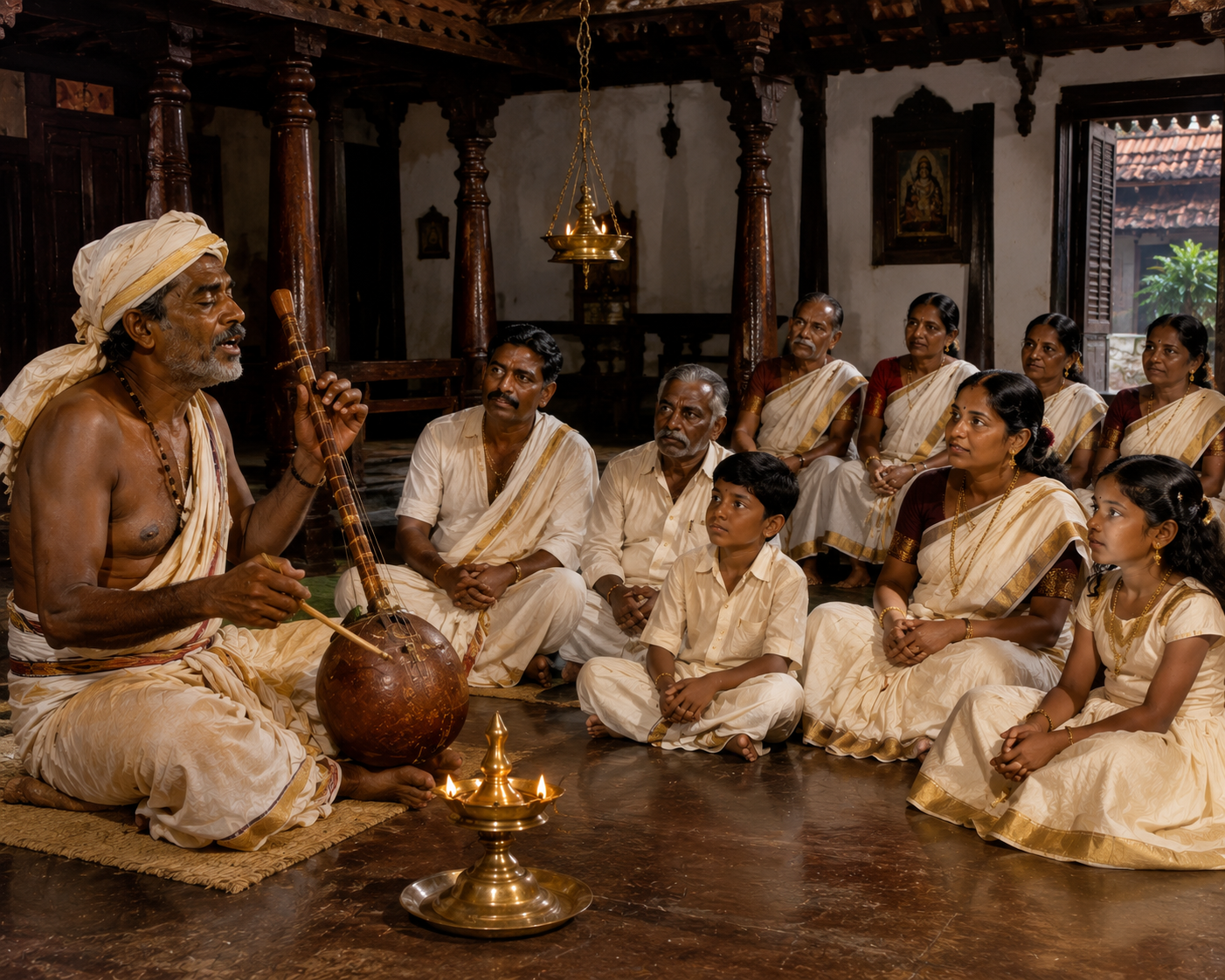
Although the Pāṇan Song has been included in collections of ancient Christian songs, it differs significantly from the traditional Christian Purātana Pāṭṭukal (Ancient Songs). The latter were most likely composed and sung by Christians themselves, whereas the Christian Pāṇan Song appears to have been composed by the Pāṇans and performed by them in Christian households and on other ceremonial occasions.
The song opens with the following invocation:
“Let me tell of the days
when Chera Perumal Thampuran
and the noble Thomas of Cana
lived and ruled together.”
This opening immediately raises an important historical question: Why did the Pāṇans compose and perform a song about Thomas of Cana, a figure who did not belong to their community, religion, or kingdom?
Equally significant is the fact that neither Jesus Christ, the founder of Christianity, nor St. Thomas the Apostle, who is traditionally credited with planting Christianity in India, became the central subject of a Pāṇan Song. Since no other Christian Pāṇan Song is known to exist, it is reasonable to conclude that whenever the Pāṇans visited Christian households, it was the story of Thomas of Cana that they sang.
Several factors may explain this unique prominence. The Pāṇans may have possessed a clearer historical memory of Thomas of Cana than of other Christian figures. Thomas of Cana appears to have played a significant role in the economic and cultural prosperity of the Chera kingdom. The Knanaya community enjoyed considerable social influence and economic prosperity, and they were known for their generosity toward performers and traditional artists. Thomas of Cana also seems to have been respected by Christians beyond the Knanaya community. One or more of these factors may explain why his story alone became the subject of a Pāṇan ballad. It is also possible that the Pāṇans wished to emphasize their long-standing association with the Knanaya community.
Many historical works discussing the apostolate of St. Thomas in India—including some regarded as authoritative—refer to the Pāṇan Song, sometimes identifying it with the Vīraḍiyān Song, and claim that it contains evidence for the mission of St. Thomas. To the best of our knowledge, however, this interpretation is not supported by the available evidence. The identification appears to rest either on the assumption that the Pāṇans and Vīraḍiyāns belonged to the same community or, if they were distinct groups, on the absence of any separate Christian song known as the Vīraḍiyān Song. Consequently, it is most likely that the Pāṇan Song is the work being referred to.
As noted earlier, only one Christian Pāṇan Song has survived. Even this composition is devoted almost entirely to the Kerala chronicle of Thomas of Cana, mentioning St. Thomas the Apostle only as a witness to the Thomas of Cana Copper Plates.
The Significance of the Pāṇan Song in Knanaya Households
The Pāṇan Song itself makes it clear that the singers entered Knanaya homes believing they did so with the blessing and approval of Thomas of Cana. The song records Thomas of Cana’s words of benediction to the Pāṇan leader:
“O Periya Thiruvarangan,
who stands before Thomas,
grant this humble servant your favour.
In my days of weariness,
grant me the strength to endure.
Praise my name,
and sing it from house to house.
Whenever my name is heard,
doors will be opened and lamps will be lit.
Wherever such a lamp is kindled,
there shall I be present.
The wise and the prosperous
will reward you generously.
They will give you rice,
salt, pepper, onions,
mangoes, coconuts,
and all the provisions found in their homes,
without withholding anything.
So shall it continue
through all generations.”
The song explains that this blessing was bestowed in gratitude for the assistance rendered by Periya Thiruvarangan, the Pāṇan leader, in bringing back the Nāṅkuṭi Parishas (“the Four Guilds”—the carpenter, bronze-smith, blacksmith, and goldsmith communities) after they had migrated from the Chera kingdom to Eelam (Sri Lanka). According to the ballad, Chera Perumal sought the assistance of Thomas of Cana to persuade these artisan communities to return.
It is significant that, when the king wished to bring back his own subjects, he turned not to one of his own officials but to Thomas of Cana, a foreign merchant and a Christian. Equally remarkable is that Thomas, in turn, entrusted this delicate diplomatic mission to Periya Thiruvarangan, a native Pāṇan.
The song further relates that it was Thomas of Cana who learned that the artisan guilds had settled in Sri Lanka. Recognizing that warfare at sea made direct intervention impossible, he advised that Periya Thiruvarangan should be sent as an envoy. This suggests that Thomas understood the close social ties between the Pāṇans and the artisan guilds and knew that, as traditional messengers, the Pāṇans could travel safely even through zones of conflict.
The ballad also records that Thomas entrusted his own staff (Aṁśavaṭi) to Periya Thiruvarangan as a token of authority. Evidently, Thomas believed that this symbol would carry greater credibility among the artisan communities than even the king’s command. This episode portrays Thomas of Cana as a leader possessing extensive international knowledge, diplomatic experience, influential relationships, and the wisdom to employ available resources effectively. It also suggests that he enjoyed exceptional prestige among the people—perhaps even surpassing that of the king—and that the king himself fully recognized these qualities.
For any impartial ruler concerned with the welfare of his kingdom, the migration of an important section of his subjects would have been a matter of deep concern and public embarrassment. The dialogue preserved in the Pāṇan Song vividly reflects this situation. When ordered to return, the artisan communities reply:
“The king has commanded
that the four of you should return now.”
“We shall not return
to a land without justice.”
The song indicates that the artisan guilds accepted Thomas of Cana’s staff as a more convincing guarantee than the king’s own assurances. This undoubtedly places the king in an awkward position. Yet it is striking that the Pāṇans continued to sing this narrative generation after generation without provoking royal displeasure. Such tolerance reflects the remarkable spirit of coexistence that characterized the rulers of medieval Kerala. These kings appear to have possessed the humility to acknowledge their own limitations rather than suppress traditions that portrayed them unfavourably. It is also possible that the economic crisis of the period had weakened royal authority, limiting the king’s ability to intervene effectively.
The ballad describes the condition of the Chera kingdom after the departure of the four artisan guilds:
“Since the Four Guilds departed,
great hardship has come upon the land.
Churches and monasteries,
their towers have fallen into ruin.
Spades, sickles, knives,
axes and every useful tool
could no longer be made.”
The description of ruined churches, monasteries, and towers suggests not an immediate collapse but the prolonged consequences of economic and social decline following the loss of skilled craftsmen.
The Pāṇan Song attributes the migration of the artisan guilds to the following incident:
“A girl of the Four Guilds
was taken in marriage
by a Velluthedan.
Because of that,
the Four Guilds
left the country.”
This explanation, however, appears historically unconvincing. According to the Parayipetta Panthirukulam tradition, the Pāṇans themselves were regarded as descendants of the twelve children born to the Brahmin scholar Vararuchi and a Paraya woman. Whether historically accurate or not, such a long-standing legend reflects a society familiar with narratives of inter-community relationships. It therefore seems unlikely that the marriage of a single artisan girl to a man from another community would have compelled the entire guild to abandon the kingdom.
For this reason, it is more reasonable to interpret the migration primarily in terms of economic insecurity rather than social unrest. The ballad’s vivid portrayal of the kingdom’s subsequent decline likewise emphasizes the indispensable contribution of the artisan guilds to the economic and cultural life of the Chera realm.
Evidence emerging from the ongoing excavations at Pattanam, near Kodungallur, conducted by the Kerala Council for Historical Research (KCHR), lends support to this possibility. Although the excavations are still in their preliminary stages and it would be premature to draw definitive conclusions, the findings available thus far suggest several plausible interpretations.
Archaeological evidence indicates that foreign coins—particularly Roman coins—were recovered in large numbers from the Pattanam region (identified by many scholars with the ancient port of Kodungallur) up to approximately the second century CE. In the succeeding centuries, however, the marked decline in the discovery of foreign coins points to a reduction in international trade through the port of Kodungallur and the resulting economic downturn. Excavations also reveal that during this same period Anuradhapura, an important port city in Sri Lanka, was emerging as a major political and economic centre, with extensive architectural activity and urban development.
The economic decline caused by the reduction of overseas trade at Kodungallur, together with the growing prosperity of Anuradhapura, may well have prompted the Nāṅkuṭi Parishas—the artisan guilds engaged in construction—to return to their homeland in Sri Lanka. For these returning craftsmen, the staff (Aṁśavaṭi) of Thomas of Cana would have symbolized not merely the restoration of lost honour but, more importantly, the revival of the Chera kingdom’s commercial prosperity. The presence at Kodungallur of a wealthy and trustworthy foreign merchant such as Thomas of Cana offered the greatest assurance of stable employment and renewed economic opportunity. His staff thus became the visible emblem of confidence in the kingdom’s economic recovery.
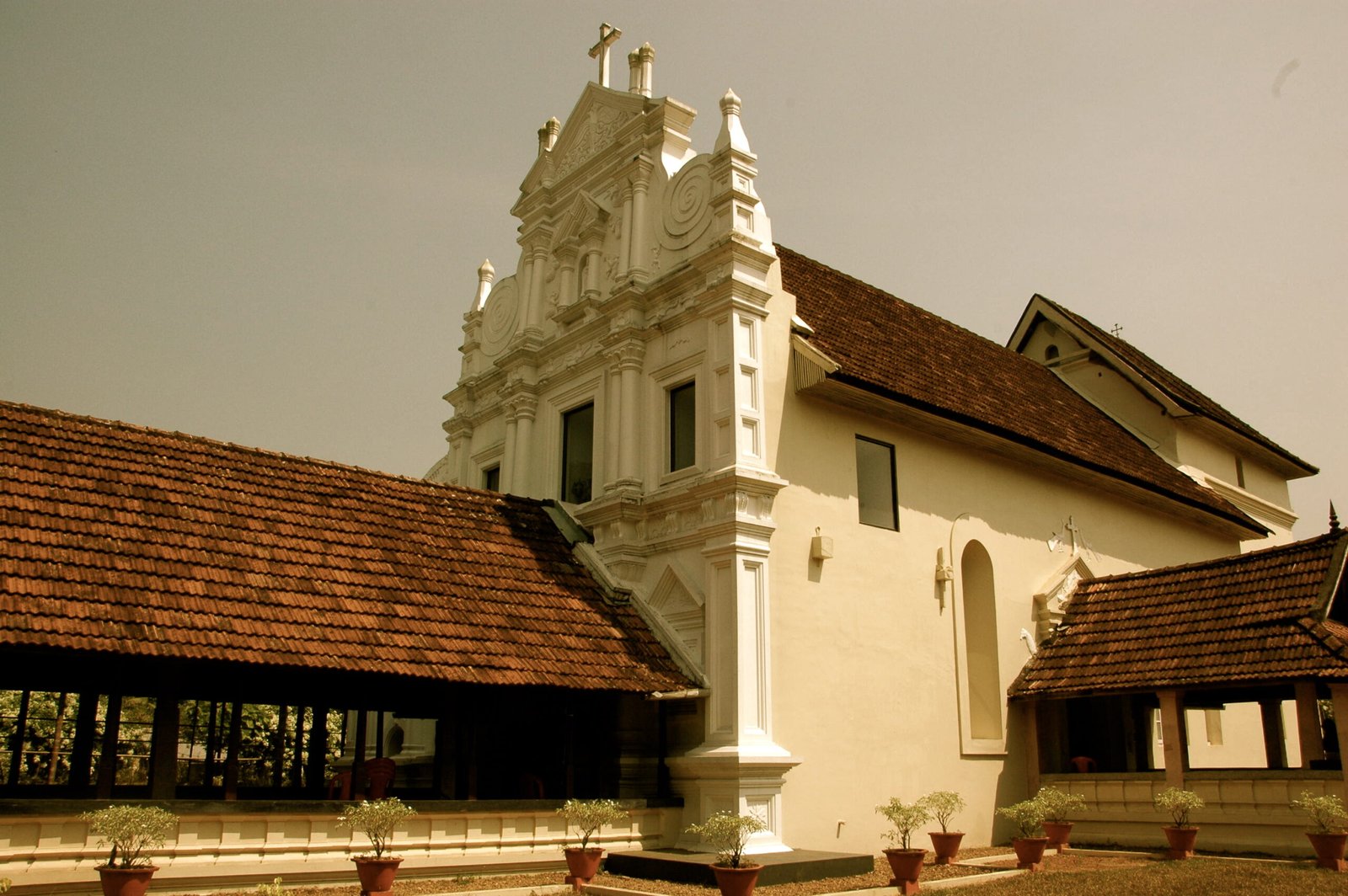
It was in recognition of this renewed hope that the artisan guilds are said to have entrusted a magnificent golden floral crown (Sauvarṇa Puṣpa Kirīṭa) to Periya Thiruvarangan, who in turn presented it either directly to Thomas of Cana or, according to another version of the tradition, to Chera Perumal, who then bestowed it upon Thomas of Cana. The textual traditions differ on this point. This crown is identified with the Vēndan Muḍi (“Royal Crown”), celebrated in the ancient songs as the “Golden Crown” or “Golden Flower.” Tradition associates it with the crown preserved to this day at St. Martin’s Church, Chungam, near Thodupuzha.
The presentation of this golden crown may be understood as a reward for Thomas of Cana’s successful efforts in bringing back the artisan communities, whom society regarded as indispensable to the kingdom’s future. It reflects a profound awareness that the prosperity of the nation ultimately rested upon the labour of its skilled craftsmen. The Vēndan Muḍi, fashioned—according to tradition—from countless small pieces of gold contributed by the women of the Nāṅkuṭi guilds from the ornaments they wore on their necks, ears, and hands, may even be regarded as an early precursor to the later Knanaya tradition of “Pidiyari” (the collective offering of a handful of rice by each household for a common cause).
Thomas of Cana’s willingness to assist the king during this period of crisis may likewise have arisen from his recognition that his own prosperity, as well as that of his community, was inseparably linked to the prosperity of the kingdom itself. What significance could a merchant have in a land where the skilled workers essential to economic activity had disappeared?
The rights, honours, and privileges that Thomas of Cana received from the king subsequently exerted a profound influence on the political, social, commercial, economic, religious, and communal standing of both Thomas and his descendants. By preserving this episode in their songs, the Pāṇans ensured that the name and achievements of Thomas of Cana—as a statesman, strategist, and visionary leader—would endure through the generations.
Likewise, Periya Thiruvarangan, whose role was instrumental in enabling Thomas of Cana and his companions to attain this position of prominence, continued to be honoured by visiting Knanaya households, singing the traditional ballad, and receiving customary gifts. Through this enduring custom, both he and his descendants enjoyed lasting recognition within the community.
Thomas of Cana’s practical wisdom is especially evident in the manner in which he immortalized his own memory: by establishing, through his descendants, a perpetual tradition of rewarding the Pāṇans for singing his story. This thoughtful arrangement, faithfully observed across generations, ensured that his name and legacy would live on in the living memory of the people.