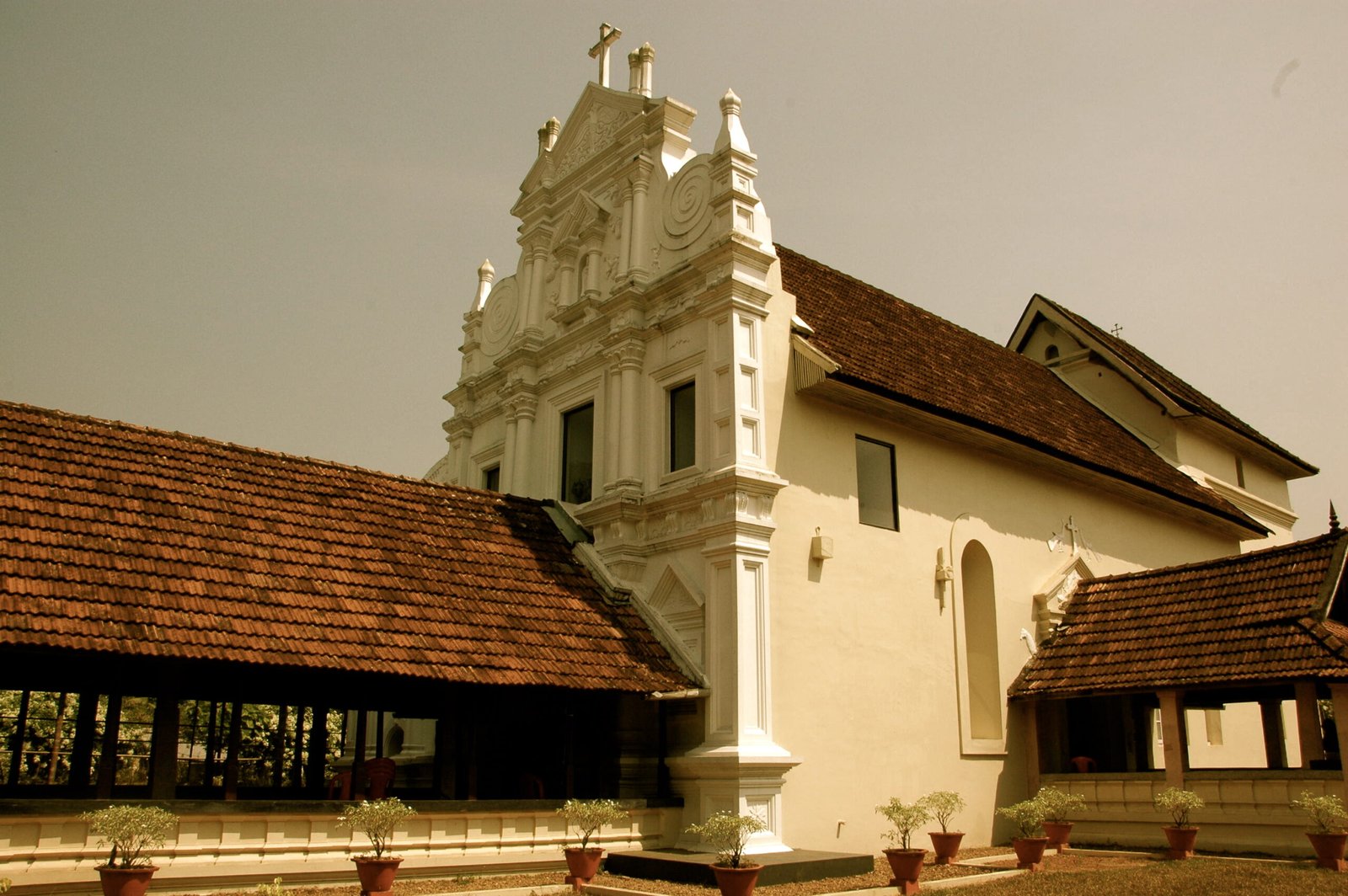
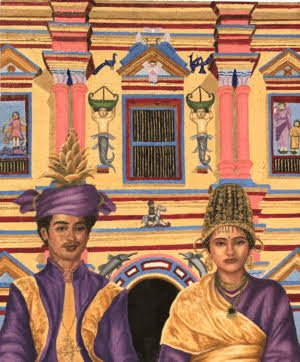
The importance given to the theology of the Cross and to Malka Mshiha (Christ the King) in the Barmariam hymn sung during Knanaya weddings is by no means insignificant. It is noteworthy that the crosses in Knanaya churches such as Kaduthuruthy and Kottayam, as well as the Cross discovered by the Portuguese at Mylapore (St. Thomas Mount), are Persian crosses, and that the inscriptions found on these crosses are in the Pahlavi script.
It is also significant that the large Golden Bridegroom’s Cross, which has been preserved since ancient times in the Kaduthuruthy Valiyapally, the principal church of the Knanayas, is worn by the bridegroom only during the Knanaya wedding ceremony. This tradition should also be considered in the context of the praise of the Cross found in the Barmariam hymn.
The repeated use of the expression “Malka Mshiha” in the Barmariam is also worthy of reflection. The Royal Crown (Vendan Mudi) said to have been given to Knai Thoma through the Cheraman Perumal is preserved today at Chungam Church in Thodupuzha. Immediately after the Knanaya wedding, this crown is placed on the heads of the newly married couple. In this manner, participation in the kingship of Christ through marriage is symbolically expressed.
It is equally noteworthy that the Royal Crown is not worn by anyone today except on the occasion of a wedding. The fact that the Kottayam Aramana Chapel is dedicated to Malka Mshiha, depicted wearing a cross and a crown, and that the first Knanaya settlement in Malabar was named Rajapuram, meaning “Malkoosa d’Malka Mshiha” or “the royal city of Christ the King,” may be coincidental; nevertheless, these traditions should be viewed within this broader theological canvas.
Conclusion
For the Knanayas, the Barmariam hymn is a living tradition and heritage and a natural and ordinary part of their lived reality. At the same time, it embodies profoundly deep theological visions.
The efforts undertaken under the leadership of Fr. Joseph J. Palackappilly, through the Christian Musicological Society, Ruha Media, and social media, to popularize the Barmariam hymn deserve appreciation.
Although this is not a hymn composed by the Knanayas themselves, it emerged in the historical milieu of the Babylonian Church, the Church rooted in the land and ecclesial tradition of the Knanaya forefathers. The Knanayas have preserved it in Kerala to this day as carefully as the pupil of their eye. Even when others criticized the practice, the Knanayas continued to sing it at weddings and thereby preserved for marriage a profound Malka Mshiha-centered theological vision.
For these reasons, I would only like to point out that the role of the Knanayas in the survival history of the Barmariam hymn should not be forgotten.
This perspective is encouragingly supported by several of the interviews available through Ruha Media. In many of these videos, even Mar Aprem, the head of the Chaldean Church of the East, explicitly states that it was from Knanayas that he first heard this hymn.
It is my hope that many more Knanayas, especially young people, will come forward with a willingness to journey back to the very sources of their sources and discover the roots of their own tradition.
May the venerable tradition of having the Vicar or a senior priest alone lead the singing of this hymn as the principal celebrant during Knanaya weddings continue.
I also hope that the efforts of certain priests to sing additional verses of this hymn and to explain their meanings will be taken up by others as well.