A few points are especially significant if you are using this as evidence in a discussion of Knanaya identity and endogamy:
- The 345 migration is explicitly described as forming an endogamous community.
The text says that the Jewish-Christian emigrants from Southern Mesopotamia “formed themselves into an endogamous community.” This is an explicit institutional description of the community’s marriage practice. - The Knanaya had a distinct ecclesiastical organization.
It states that under the East Syrian bishops, Knanaya Christians had their own churches and priests distinct from those of the non-Knanaya St Thomas Christians. - This distinction continued under Latin ecclesiastical administration.
The text specifically says that the system of separate Knanaya churches and priests continued even under the European Latin bishops. - The 1887 arrangement is important.
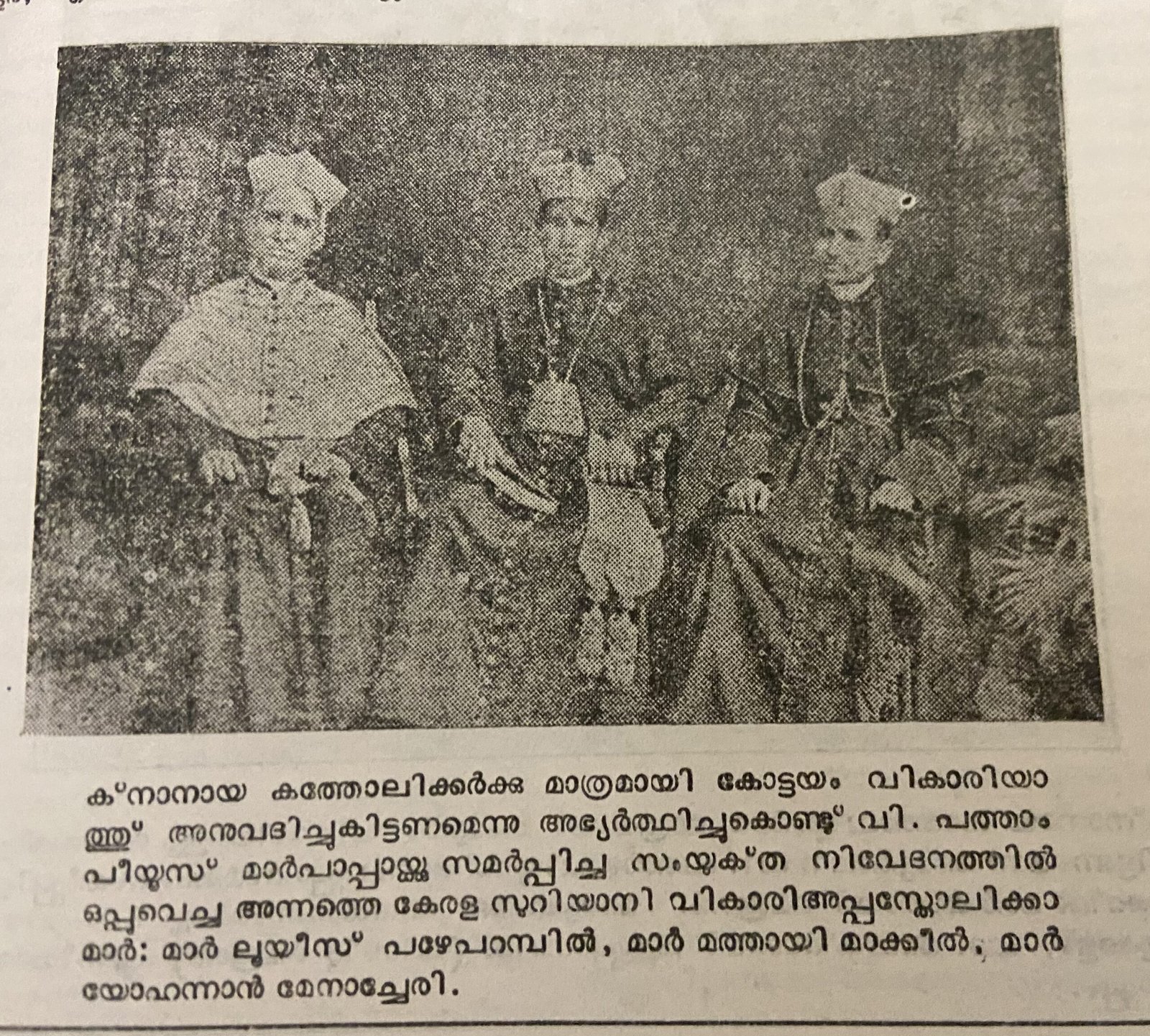
Following the ritual separation of the Catholics of Kerala into Oriental and Latin jurisdictions, the Holy See directed Bishop Charles Lavigne to appoint a separate Vicar General for the Knanaya Community. Mar Mathew Makil, who held that position, subsequently became bishop of Changanassery. - 1911 is the decisive juridical milestone.
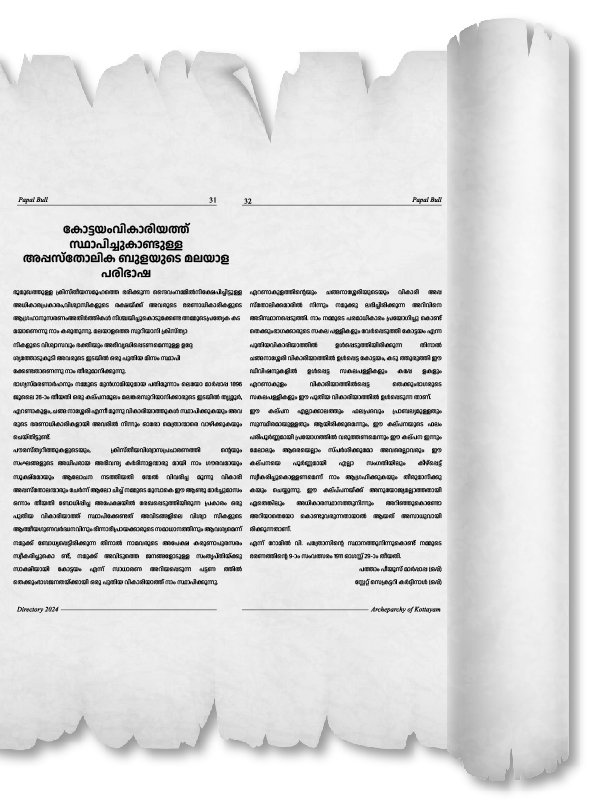
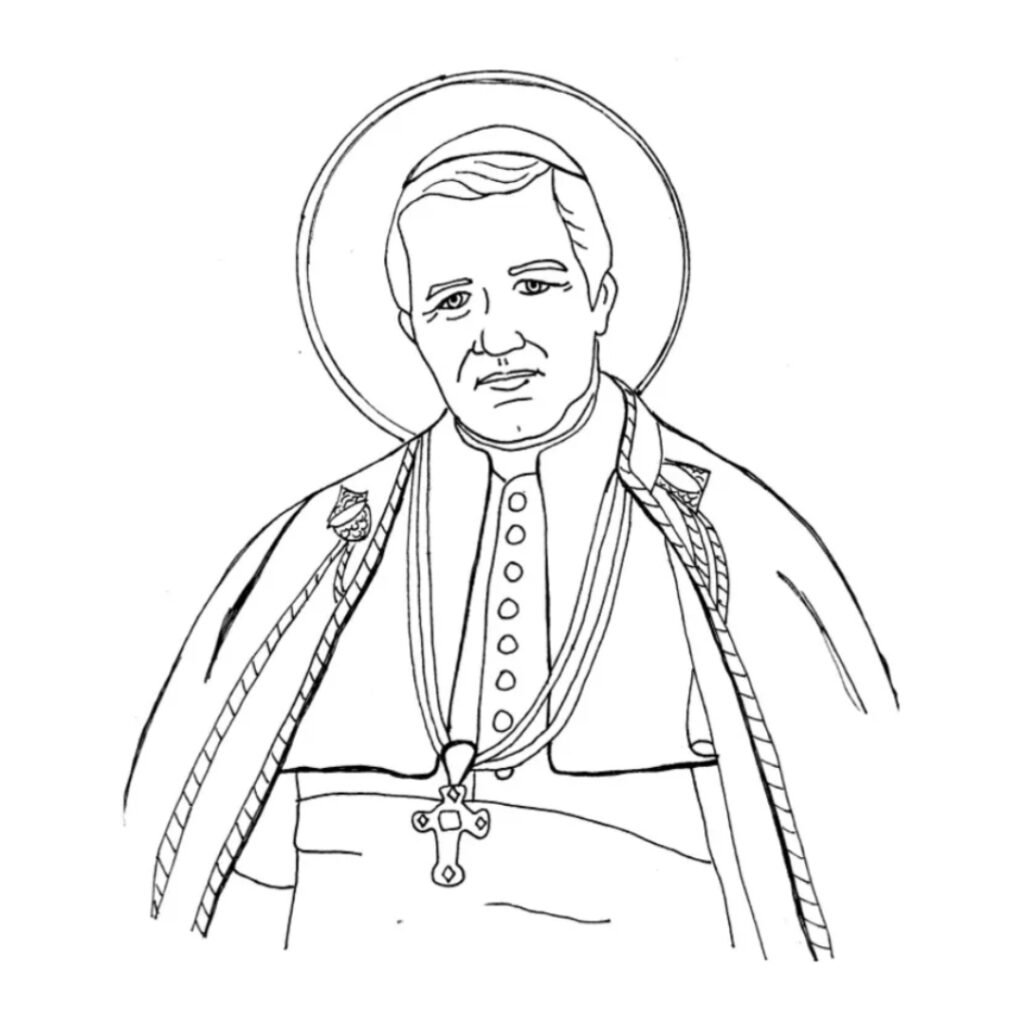
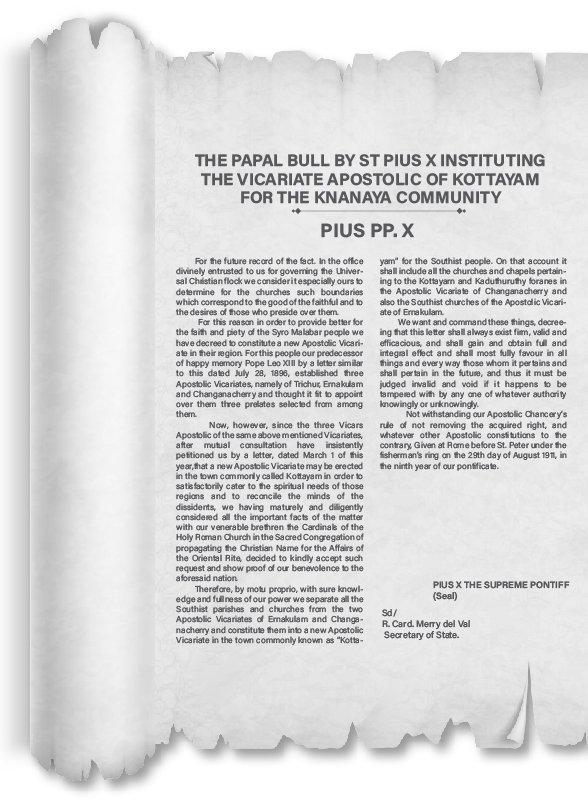
On 29 August 1911, Pope St. Pius X established the Vicariate Apostolic of Kottayam exclusively for the Knanaya Community, through the apostolic letter In Universi Christiani. - 1923: elevation to an eparchy.
On 21 December 1923, Pope Pius XI elevated the Vicariate Apostolic of Kottayam to the status of an Eparchy. - 1955: territorial jurisdiction was extended.
The text says that when the territorial limits of the Syro-Malabar Church were extended in 1955, the jurisdiction of the Eparchy of Kottayam was likewise made co-extensive with the then-expanded territory of the Syro-Malabar Church. - 2003–2005: the pro-gente suddistica status was reaffirmed.
The passage describes Pope John Paul II’s 2003 decision that the status quo “pro gente suddistica” of the Eparchy of Kottayam was to be maintained. Subsequently, the Syro-Malabar Synod consented to its elevation as a metropolitan see, and in 2005 Kottayam became a metropolitan see.