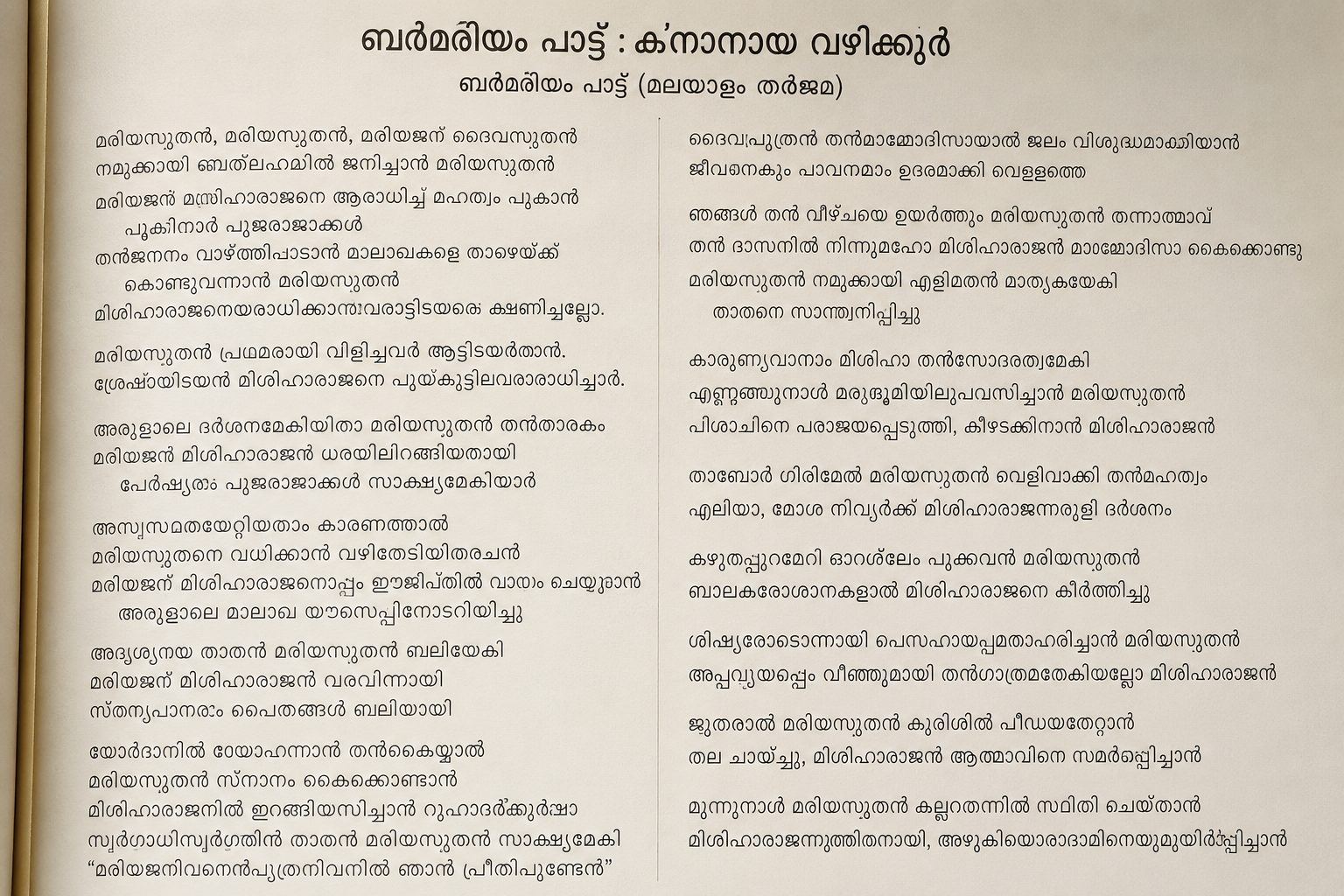
This hymn opens up rich possibilities for theological study in areas such as Trinitarian Theology, Pneumatology, Christology, Mariology, Ecclesiology, Liturgy, Sacramental Theology, and Theological Anthropology.
Trinitarian Theology and Pneumatology
By addressing Jesus as Bar Alaha (“Son of God”), the hymn emphasizes the Father–Son relationship. In portraying the Son of Mary offering Himself in sacrifice to the invisible Father, it presents Jesus as living in perfect communion with God the Father even from His earthly life. The Father’s testimony at Christ’s baptism further confirms this relationship. Expressions such as “My Son” and “In Him I am well pleased” reveal the unique filial bond and love between God the Father and the Messiah. The hymn also depicts Jesus as the model of humility who consoles the Father, and after His resurrection, as the One enthroned at the Father’s right hand. Furthermore, the title Emmanuel (“God with us”) attributes to Jesus the abiding presence of God the Father.
The hymn also reflects a profound understanding of the Holy Spirit. It proclaims that at His baptism the Ruha d’Qudsha (Holy Spirit) descended and rested upon Christ the King, presenting Jesus as the One filled with the Holy Spirit. We also encounter the crucified Christ who surrenders His spirit on the Cross. The Son of Mary sends the Holy Spirit as the Helper upon the Apostles, thereby granting wisdom and understanding to His people.
Christology and Mariology
The hymn contains several significant Christological and Mariological expressions. Terms such as Bar Maryam, Yaldeth Maryam, and Bar Alaha are translated respectively as Son of Mary, Born of Mary, and Son of God. Their precise usage carries profound theological significance.
Every word in the refrain, “Bar Maryam, Bar Maryam, Bar Alaha d’Yaldeth Maryam,” identifies Christ as the Son of Mary, the Son of God, and the One born of Mary. Together these titles affirm that the one person of Jesus Christ possesses both a fully human and fully divine nature. By calling Jesus Bar Alaha, the hymn also implicitly acknowledges Mary’s divine motherhood (Theotokos).
Likewise, while the title Bar Maryam emphasizes Christ’s earthly birth and humanity, the expression Malka Mshiha (“Anointed King”) highlights His heavenly kingship and glorified state. Other titles—including the Great Shepherd, the Sacrificial Lamb, the Baptized One, the Merciful One, the One whose glory was revealed on Mount Tabor, and the One seated at the right hand of the Father—are all rich in Christological significance.
Ecclesiology, Liturgy, Sacramental Theology, Theological Anthropology, and the Persian Connection
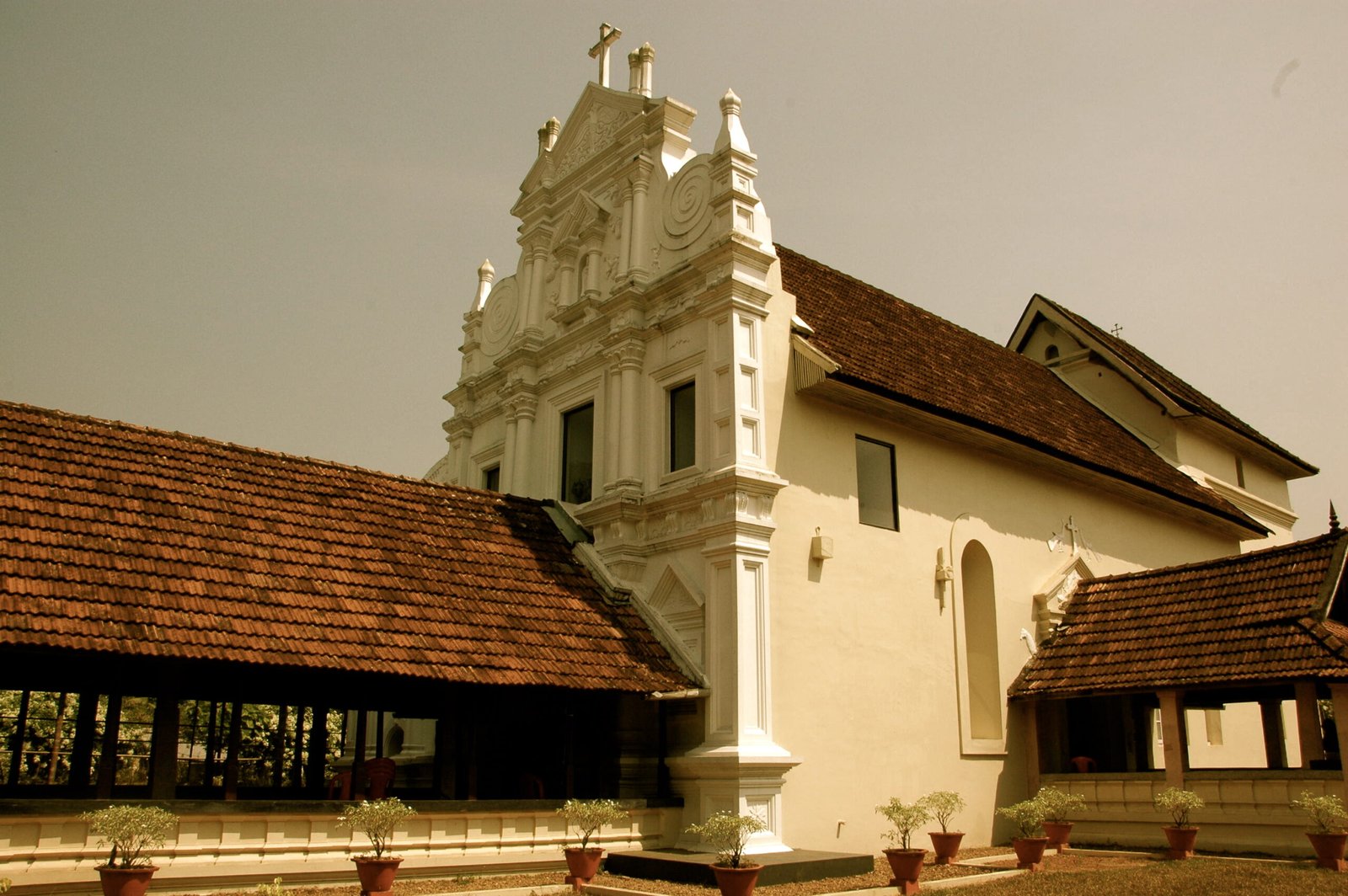
The hymn’s reference to the discovery of the Cross on which Christ was crucified carries considerable ecclesiological significance. The veneration of the Holy Cross in the Eastern Churches, together with the presence of Persian Crosses in Kerala—especially in the Knanaya churches of Kaduthuruthy and Kottayam—invites theological reflection. Although traditions and ancient records attribute the erection of crosses at the Seven and a Half Churches to St. Thomas the Apostle, very few ancient crosses survive today, making this association particularly noteworthy.
The hymn also presents the Church as the Bride of Christ, a central ecclesiological theme. Its reference to Simon Peter, the son of Jonah (Kepha), through whom the Church becomes the Bride of Christ, may also be understood as an allusion to the primacy entrusted to St. Peter.
The hymn recalls the entire liturgical cycle of the East Syriac tradition, beginning with the Season of the Nativity, commemorating the Incarnation of Christ, and continuing through Denha, Sawma, Qyamta, the Apostles (Sliha), Kaitha, Elijah–Cross–Moses, and finally the Season of Church Dedication, which celebrates the glory of Christ’s kingship.
References—both explicit and implicit—are found to the sacraments of Baptism, Confirmation, the Holy Qurbana (Eucharist), Reconciliation, Matrimony, and Holy Orders. The expression “making the waters a holy womb that gives life” attributes new sacramental meaning to the baptismal waters. Likewise, the statement “raising up fallen Adam” echoes the profound theological teaching that Christ, the Second Adam, fulfills and restores what was lost through the first Adam, thereby strengthening the foundations of theological anthropology.
Finally, by identifying Persia as the homeland of the Magi, the hymn also establishes an important historical and theological connection with the Persian Christian tradition.