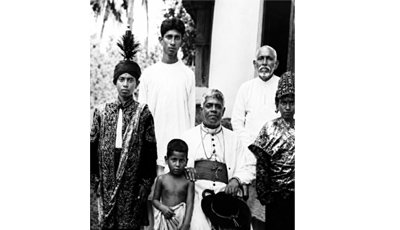
The depth of the Knanaya community’s collective identity is reflected in its ancient songs, many of which have been preserved in palm-leaf manuscripts. These invaluable historical records provide authentic evidence for the study of the social customs and traditions of the St. Thomas Christian community. Accordingly, this article examines the Knanaya historical songs, Knanaya folk songs, wedding songs, Vyaazha songs, and other traditional compositions associated with Knanaya marriage ceremonies. It analyzes the customs, rituals, ceremonial offices, attire, ornaments, and other cultural elements described in these songs, while also briefly discussing their relevance in contemporary Knanaya society.
Sources
The principal sources for this study are the surviving palm-leaf manuscripts of the ancient songs, the first printed edition published in 1910, and the currently available editions. Owing to limitations of time, however, this article is based primarily on a detailed examination of one palm-leaf manuscript and one modern edition. Consequently, certain finer details may not have been addressed, and the author respectfully requests the reader’s understanding regarding any omissions.
The primary source material quoted in this study comes from palm-leaf manuscripts. Their orthography differs considerably from modern Malayalam writing. For example, the long vowel ē is often written as e (thus Keralam appears as Keralam in an older orthographic form), the use of the chandrakkala differs from contemporary practice, and alternative vowel symbols frequently appear in place of the modern forms. Likewise, several words and expressions found in the manuscripts differ from the versions sung today.
For instance, the opening lines of the Mar Thoma Song appear in the original palm-leaf manuscript in a form that differs noticeably from the version currently sung by the community. Such variations illustrate the evolution of language and orthography over the centuries. Readers should therefore bear in mind the distinctive characteristics of palm-leaf manuscript writing when consulting these quotations.
Ancient Songs Related to Marriage Rituals
Songs such as the Women’s Songs (Penn Pattu), Men’s Songs (Aan Pattu), and Church Songs (Palli Pattu) are generally well known. For the purposes of this study, however, the ancient songs have been classified according to their relationship with marriage customs. This includes songs that describe wedding ceremonies, songs sung as part of specific marriage rituals, and other compositions that contain references to marriage customs and traditions. Such a classification helps explain how present-day Knanaya wedding rituals and ceremonies are reflected in these ancient compositions.
A natural question arises as to whether every song preserved in the ancient collections can be regarded as a Knanaya song. This study includes only those songs that can be confidently identified as Knanaya in origin or whose Knanaya association is highly probable. The principal criteria used in making this determination are:
- The song narrates the history of the Knanaya migration.
- It describes customs that are uniquely associated with the Knanaya community and are not claimed by other St. Thomas Christian groups, such as Nadavili and the ceremonial presentation of oil and water (Neyyum Neerum Veykkal).
- It refers to the traditional privileges, honors, and insignia—such as the Chettedam, Vekkanmudi (Golden Crown/Floral Head Ornament), and other ceremonial distinctions—traditionally believed to have been granted to Knai Thoma by Cheraman Perumal.
The fact that these ancient songs, preserved in palm-leaf manuscripts dating back more than three centuries, contain detailed references to Knanaya marriage customs and rituals strongly suggests that these traditions were already firmly established and faithfully observed within the community during that period. Thus, the songs constitute valuable historical evidence for the continuity and preservation of Knanaya cultural and ceremonial heritage.
1. Songs Describing Wedding Ceremonies
The following are traditional songs that describe various Knanaya wedding ceremonies and rituals:
- Antham Charthu Pattu (Song of the Bridal Head Adornment)
- Mangalyam Vattakkali (Wedding Vattakkali Song)
- Vaazhu Vattakkali (Blessing Vattakkali)
- Enna Pattu (Oil Ceremony Song)
- Vaaleyalulloru Manka Vattakkali
- Ettuthira Vattakkali
- Yaakkobinte Vattakkali (Jacob’s Vattakkali)
- Aalayka Nayan Vattakkali
- Aadiyil Adam Pizhachathu Theerppanayi Vattakkali
- Nalloru Vannisrayiloru Kannithan Vattakkali
- Makkathu Vattakkali
These songs collectively narrate and commemorate the various ceremonies and customs associated with the traditional Knanaya wedding.
2. Songs Associated with Wedding Rituals
The following songs accompany specific rituals performed during the Knanaya wedding ceremony:
- Mayilanchi Pattu (Henna Song)
- Panthal Pattu (Wedding Pavilion Song)
- Ayani Pattu
- Vaazhu Pattu (Blessing Song)
- Adachu Thurappattu (Opening Ceremony Song)
- Kulippattu (Ritual Bath Song)
- Vilakku Thodeel Pattu (Lamp Ceremony Song)
- Margam Kali Pattu (Song of the Margam Kali Dance)
- Paanan Pattu
- Bar Maryam Pattu (Song of the Virgin Mary)
These songs are closely associated with individual wedding rituals and are traditionally sung as part of the respective ceremonies, preserving the liturgical, cultural, and communal heritage of the Knanaya community.
3. Songs Containing References to Marriage and Ceremonial Privileges
The third category consists of songs that preserve information relating to marriage customs, social privileges, and the ceremonial status of the Knanaya community. These include:
Mar Thomman, Nallororoshilam, Munnam Malankara, Innu Nee Njangale Kaivitto, Ponnaninthidum, Ettuthira Vattakkali, Cheriya Tobiasinte Pattu, Kaduthuruthy Kurisinte Pattu, Kottayam Palliyude Pattu, Chungathil Kurisinte Pattu, Uzhavoor Palliyude Pattu, Kaippuzha Palliyude Pattu, Idaykkattu Palliyude Pattu, Kottayathu Cheriya Palliyude Pattu, Vadimanam Vattakkali, Mar Abraham Methrante Pattu, Perumapperiyonte Pattu, Thathappattu, and Kuliyar Konka Pattu.
A careful examination of these songs reveals several important characteristics, two of which are discussed below.
1. Syriac Linguistic Influence
The ancient songs preserve a remarkable number of Syriac words, either in their original form (tatsama) or in adapted forms (tatbhava) that have been assimilated into Malayalam.
For example, the name Mar Thoma Sleeha consists entirely of Syriac words: Mar (Saint), Thoma (Thomas), and Sleeha (Apostle). By contrast, the name Marthomman represents an adapted Malayalam form, created by combining the Syriac words Mar and Thoma with the Malayalam suffix -an.
Among the Syriac terms found in these songs are Sleeha, Kantheeshanayan, Mshiha (Messiah), Eesho Mshiha (Jesus Christ), Karthav Eesho Mshiha, Rishuma, Cheloka, Kasheesha (Priest), Kahana, Alam, Anmeni, Paradisa (Paradise), Kandisha, Kuruvana (Qurbana), Adam, Hawwa (Eve), Skheepa (Cross), Maran Eesho Mshiha, Yevunan, Mari Yohannan, Ruha (Spirit), Alayka Nayan, Yousep (Joseph), Malakha (Angel), Kroval, Bava (Father), Alaha (God), Varugeesu, Niviya (Prophet), Kooshayenna Rajakkal, Qudasha (Consecration), Ruha d’Qudsha (Holy Spirit), Appaspoppa, Maran, Mammodisa (Baptism), Martham Mariam, and Mari Yohannan Moundana, among others.
The abundance of Syriac vocabulary in these songs may be regarded as a reflection of the spiritual consciousness of a people whose liturgical and ecclesiastical life was deeply rooted in the Syriac tradition.
2. Relationship with the Syriac Church
The ancient songs contain numerous references to biblical lands such as Canaan and Jerusalem. Equally significant are the frequent references to Baudashi (Bavudashi, Vavudashi), the Malayalam form of the ancient city now known as Baghdad.
Baghdad is remembered in these songs as the homeland of Knai Thoma, the seat of the Catholicos who blessed and commissioned the migration, and later as the centre from which bishops were sent to India.
For example, the Vaazhu Pattu refers to “entering Baudashi,” while the Yaakkobinte Vattakkali speaks of “journeying to the city of Vavudashi.” Likewise, the Song of Bishop Mar Avuran contains the line:
“In the kingdom of ancient Vavudashi, through the way of Jesus Christ, long before, was Simon Kepha.”
Another verse from the same song states:
“By the command of the Catholicos, together with Yonan and many others, the noble Sargon came and settled at Kodungallur.”
These verses testify that bishops were sent to India under the authority of the Catholicos of the East. They further affirm that the historical relationship between the Syriac Church and the Church of India was founded upon the Way of St. Thomas (Thoma Margam) and the apostolic tradition associated with him.
Several other songs reinforce this ecclesiastical relationship. For example, the Song of Mar Avuran proclaims:
“Throughout the land of Malanadu, along the way of Mar Thoma… Therefore, honors were bestowed upon the clans, and the Catholicos granted dignities in all four directions to those who followed the way of Mar Thoma from Vavudashi.”
Similarly, the Nallororoshilam Vattakkali recounts how the ecclesiastical head—referred to in ancient usage as Pappa, a title then applied to Patriarchs and Catholicoi as well as the Pope—commissioned the mission to Malanadu, granted permission for the journey, and conferred privileges and ecclesiastical honors upon the community.
The Ponnaninthidum Vattakkali likewise speaks of:
“The holy Catholicos and all who followed the way of Mar Thoma.”
Collectively, these songs preserve the historical memory of the enduring relationship between the Syriac Church and the Church of India. Since the Knanaya community regarded itself as the principal bearer and custodian of this relationship, it is understandable that numerous songs concerning the Knanaya migration were preserved within the corpus of ancient songs and continued to be sung on important occasions, especially during weddings and other community celebrations.
3. The Prevalence of Wedding-Related Songs
The Knanaya community has preserved and continues to use an extensive repertoire of songs associated with marriage ceremonies. These include approximately eleven songs describing wedding ceremonies, ten songs accompanying specific wedding rituals, and about twenty songs containing references to marriage customs, ceremonial privileges, and social status. Altogether, nearly forty traditional songs are directly connected with the Knanaya wedding tradition.
This remarkable corpus demonstrates the inseparable relationship between music and ritual in Knanaya culture. Virtually every stage of the traditional wedding ceremony is accompanied by a corresponding song, making it difficult to imagine the performance of any ritual without its associated musical tradition. The songs are therefore not merely artistic expressions but integral components of the ceremonies themselves.
4. Every Wedding Ritual Is Reflected in the Songs
The Thekkumbhagam songs preserve detailed references to virtually every aspect of traditional Knanaya marriage customs, ceremonies, and ceremonial privileges. These songs function as valuable historical records, documenting rituals that have been faithfully transmitted through generations.
For example, the Mar Thomman Pattu speaks of gathering the elders of the community and praying for their blessings:
“Let all the respected elders assemble and invoke blessings.”
The Antham Charthu Pattu refers to fixing the auspicious wedding date under the guidance of the Maran (ecclesiastical authority):
“With the Maran presiding, the auspicious wedding day is determined.”
The Mar Thomman Pattu also describes the bridegroom proceeding to the wedding ceremony at the appointed auspicious hour, while the Vaaleyalulloru Manka Vattakkali mentions the ceremonial elephant procession. The Mangalyam Vattakkali describes seating the bride and groom upon the ceremonial platform and their stately procession accompanied by songs and rhythmic movements.
Numerous songs also preserve vivid descriptions of individual wedding rituals. For instance, the Mar Thomman Pattu contains the phrase:
“The paddy and the ceremonial water have been placed before us, and my heart is filled with joy.”
In this emotionally expressive song, which portrays a mother’s mixed feelings of anxiety and consolation on the occasion of her daughter’s marriage, the expression “placing the paddy and water” (Nellum Neerum Parametti Vaykkuka) is employed as a poetic synonym for the wedding itself, underscoring the ritual’s central significance.
The Antham Charthu Pattu further describes several important ceremonies, including:
- the ceremonial joining of the bride and groom’s hands,
- placing the Manthrakodi (bridal mantle) upon the bride,
- reciting the marriage blessings,
- tying the Thali (sacred marriage pendant),
- singing and dancing by the assembled women,
- the bridegroom’s maternal aunt arriving with the traditional lamp and ritual vessel,
- the women raising the Kurava (ceremonial ululation),
- the presentation of paddy and ceremonial offerings,
- and finally leading the bride into the decorated wedding chamber.
Similarly, the Mayilanchi Pattu describes the application of henna to the bride:
“When the maidens celebrate the wedding, they adorn her with fresh green henna.”
The Antham Charthu Pattu also refers to the ceremonial bath following the adornment of the bride:
“Having adorned her with the Antham, she bathes ceremonially.”
The Yaakkobinte Vattakkali mentions the ritual of joining hands (Othu Kaipidikkal), while the Vilakku Thodeel Pattu records the lighting of the ceremonial lamp and the making of the Sign of the Cross over it:
“The lamp was reverently placed, circled three times, and the Sign of the Cross was traced upon it.”
These and numerous other examples demonstrate that the ancient songs preserve an extraordinarily comprehensive record of Knanaya wedding rituals. Far from being merely ceremonial music, they function as oral historical documents that safeguard the customs, symbolism, and collective memory of the community across generations.
5. Wedding Preparations and Ceremonial Setting
Since marriage is celebrated as a grand communal occasion, the ancient songs devote considerable attention to the preparations and ceremonial setting. Alongside rituals such as the formal betrothal, great importance is attached to cleaning and decorating the house and its surroundings. The wedding pavilion (panthal), bridal chamber (manavara), ceremonial dais (manakkolam), bridal canopy (paavada), and ceremonial lamps all form integral parts of the wedding environment.
Numerous songs vividly portray these preparations. The Mangalyam Vattakkali describes the construction of the wedding pavilion and the illumination of the ceremonial space:
“A grand pavilion was erected for those who came from every direction, beautifully decorated with silk hangings, while the ceremonial wedding hall was brilliantly illuminated.”
Similarly, the Yaakkobinte Vattakkali speaks of silk canopies, magnificently decorated entrances, beautifully adorned wedding pavilions, and golden lamps embellished with precious stones. Other songs refer to the richly decorated pavilion, the ceremonial bridal canopy, hanging lamps, seven-tiered golden lamps, and numerous ceremonial oil lamps. References such as:
“They hung magnificent lamps within the decorated pavilion,”
and
“Silver lamps suspended by elephants, countless golden lamps adorned the ceremonial hall,”
demonstrate the grandeur and festive atmosphere that traditionally characterized Knanaya weddings.
6. Wedding Attire and Ornaments
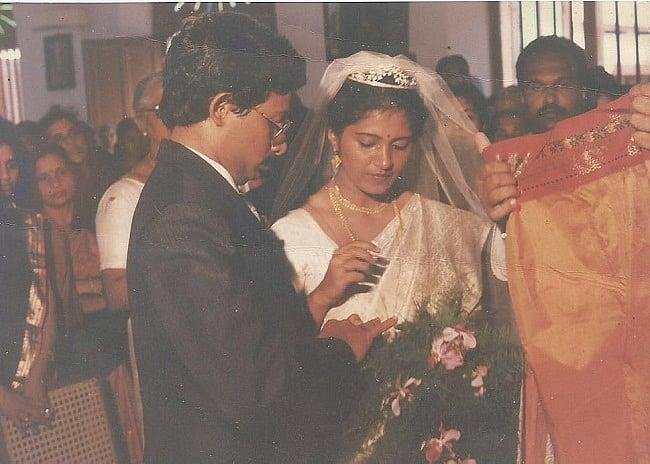
The songs also provide valuable information regarding the garments and ornaments worn during Knanaya weddings. References are found to silk garments, embroidered robes, ceremonial jackets, and beautifully woven bridal attire.
For example, the Kulippattu declares:
“The bridegroom requires a finely woven silk garment, and the bride likewise desires a beautifully embroidered silk dress.”
Another song describes elegant ceremonial robes and jackets worn by both bride and groom, emphasizing the importance attached to dignified appearance during the wedding.
Even more elaborate are the descriptions of ornaments. The songs mention:
- golden crosses,
- gold necklaces,
- coin necklaces,
- gemstone necklaces,
- earrings,
- bangles,
- finger rings,
- armlets,
- anklets,
- waist belts,
- jeweled crowns,
- decorative head ornaments,
- precious stones including pearls, rubies, emeralds, diamonds, coral, crystal, and sapphire,
- ceremonial fans (Alavattam) and white fly-whisks (Venchamaram).
One song beautifully portrays the bride adorned with golden ornaments, radiant necklaces, rings, jeweled earrings, and an elaborate golden crown before appearing in her dazzling white bridal attire. Another describes the bride wearing bracelets, a golden cross necklace, shining pendants, golden ornaments upon her forehead, and her beautifully dressed hair.
These descriptions reveal not only the richness of traditional Knanaya bridal attire but also the community’s appreciation for ceremonial elegance and artistic craftsmanship.
7. The Vendhan Mudi (Royal Crown)
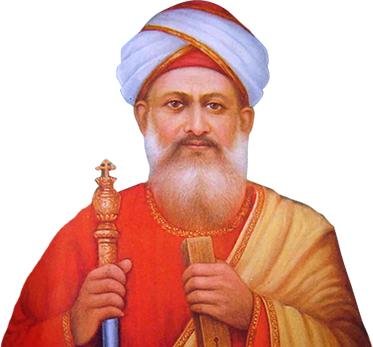
Among the most distinctive ceremonial insignia mentioned in the ancient songs is the Vendhan Mudi, the Royal Crown.
According to Knanaya tradition, when the artisan guilds known as the Nankudi Parisha (including the carpenter, bronze smith, blacksmith, and goldsmith) returned from Eelam (Sri Lanka) to Kodungallur through the efforts of Knai Thoma, they presented a finely crafted golden crown to Cheraman Perumal as a token of gratitude. The king, however, bestowed this crown upon Knai Thoma, recognizing him as the principal architect of the mission.
Today, the Vendhan Mudi is preserved in St. Martin’s Church, Chungam, Thodupuzha. It consists of two ceremonial pieces: one shaped like a flower rising above the head, and another fitting closely around the head like a crown. In the ancient songs it is referred to by several names, including Ponmudi (Golden Crown), Ponnumpoovu (Golden Flower), and Vendhan Mudi.
Numerous songs celebrate this unique insignia. For example:
“The king and his queen were beautifully adorned, and with great honor the golden flower was placed upon them.”
Another song speaks of:
“Golden crowns, golden flowers, and radiant forehead ornaments.”
Elsewhere we read:
“The splendid golden flower was placed with honor,”
and
“The shining golden crown blossomed like a radiant flower.”
These repeated references demonstrate that the Vendhan Mudi formed an important element of the ancient song tradition.
Since the Vendhan Mudi was, according to Knanaya tradition, presented to Knai Thoma and has been carefully preserved through successive generations within the Knanaya community, songs referring to this unique ceremonial insignia may reasonably be regarded as distinctly Knanaya compositions. Their preservation serves as further evidence of the community’s historical consciousness and the continuity of its ceremonial heritage.