Introduction
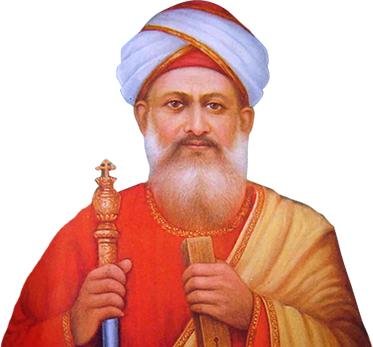
Knai Thomman, a person of Persian origin and a member of the Chaldean Syriac Church, played a significant role in shaping the course of Kerala history. According to tradition, in AD 345, Knai Thomman led a migrant group that arrived in Kerala from Persia with the objective of strengthening the Church in India. The group consisted of about four hundred people belonging to seventy-two families from seven lineages, accompanied by Mar Joseph of Urfa, four priests, and several deacons. Through the royal privileges he received from the Cheraman Perumal as a result of foreign trade and social interactions, through the establishment of hierarchical relations between the Church in India and the Chaldean Church, through the introduction of the Syriac liturgical tradition into Kerala, through the strengthening of the ecclesial life of the St. Thomas Christians, and through the formation of a distinct community that emerged from his migration and came to be known as the Knanaya community, a name derived from the terms Knai/Kenan associated with his own name, Knai Thomman became a decisive force in giving Kerala history a distinctive character. The community that emerged from his migration also played a significant role in the development of Kerala society.
Tradition testifies that the group that migrated to Kerala with Knai Thomman continued to exist as a distinct community. The traditions and ancient songs of the Knanaya community, as well as the accounts of the early European writers, testify that they maintained themselves as such a distinct community. One of the principal elements of this distinctiveness is the endogamous marriage practice that Knanayas have observed from ancient times. That is, a Knanaya person traditionally marries only from within the community. Those who, for whatever reason, left the community and married outside it were not regarded as members of the Knanaya communal body. This is a tradition that the community continues to observe even today.
It may be assumed that both their Jewish origin and the social structure of Kerala contributed to the development of this tradition. At the same time, according to the traditional understanding that children are regarded as Knanayas only when both their father and mother are Knanayas, the children born from marriages outside the community do not become Knanayas. Therefore, the realization that marriages with members of other communities could eventually threaten the survival of the community must have been, and continues to be, one of the reasons that motivated Knanaya community members to maintain endogamy and to refrain from recognizing those who marry outside the community as members of the communal body.
A person who is not part of the Thekkumbhagam communal body cannot continue as a member of the Kottayam Archdiocese, which was established specifically for the Thekkumbhagam people. When a member of the Knanaya community marries outside the community, permission is granted for the family resulting from that marriage to join a non-Knanaya diocese. It has been the longstanding and customary canonical practice for such persons to request permission from the Archdiocesan Curia to transfer their membership from the Kottayam Archdiocese and, after completing the required procedures, to join another diocese.
It is particularly noteworthy that no distinction is made in granting such permission on the basis of the person’s financial status, social standing, profession, intellectual level, personal influence, family status, gender, or any other consideration. It is also significant that, among those who have requested such permission, not even one person has been denied it.
The same principle applies in the Catholic Church when a member of a diocese established with territorial boundaries moves outside the territorial limits of that diocese. For example, if a member of the Diocese of Palai moves to Thrissur Town and settles there, that person would naturally become a member of the Archdiocese of Thrissur. The canonical procedure for this is to obtain permission from the mother diocese, together with the necessary documents, including the baptismal certificate, and submit them to the new diocese in order to transfer membership.
In the Kottayam Archdiocese, which has been established with personal jurisdiction rather than territorial jurisdiction, a similar situation arises when the diocesan bishop cannot exercise personal jurisdiction over an individual under the circumstances prescribed by the Church’s canonical procedures. In such circumstances, a transfer to another diocese becomes necessary. Transfer of diocesan membership in connection with marriage is both a normal and legally recognized practice in the Catholic Church. In Kerala, Catholic women generally join their husband’s parish and consequently his diocese at the time of marriage; this constitutes a normal transfer of diocesan membership. When individuals belonging to two different Eastern Catholic Churches marry, the woman may join the Church of her husband; such a transfer is also canonically recognized.
However, in the context of marriages with members of other communities, certain individuals who obtained permission from the Kottayam Archdiocese, transferred their membership to other dioceses, and subsequently sought to claim membership again in the Knanaya communal body have begun to question these ecclesiastical procedures, as well as the authenticity and historical basis of the tradition of endogamy on which these procedures are founded.
In support of their position, they refer to certain statements made by a few European writers suggesting that Knai Thomman had two wives—either two lawful wives or one wife and one concubine—and that one of them was from Kerala. They also refer to certain accounts produced by indigenous writers only from the beginning of the twentieth century onwards. These references are presented as evidence against the historical authenticity of the Knanaya tradition of endogamy.
In the book Symposium on Knanaites, edited by Dr. Jacob Vellian and published in 1987 in connection with the Platinum Jubilee of the Kottayam Diocese, Rev. Fr. Kollaparambil contributed an article entitled “Historical Sources on the Knanaites.” The article brought together the available accounts concerning the Knanaya community written by early European authors, along with translations of those accounts.
Subsequently, some have interpreted the contents of this article as meaning that Rev. Fr. Kollaparambil himself had stated that Knai Thomman had two wives, one of whom was a Malayali. This interpretation, however, does not represent what Fr. Kollaparambil intended to convey. He did not present the claim as something he himself believed or accepted as historical fact. Rather, he identified it as a baseless legend that had emerged in the context of communal rivalry.
Through this article, we intend to make it clear that Fr. Kollaparambil did not write that Knai Thomman actually had two wives, including a Malayali wife, as a historical fact or as an idea in which he personally believed. Rather, he reported the claim as an unfounded legend arising from communal rivalry. Furthermore, it can be demonstrated, on the basis of other considerations as well, that this legend is factually untenable.
Quotations Presented by Rev. Dr. Jacob Kollaparambil
In the above-mentioned article, Rev. Fr. Kollaparambil has reproduced everything written by each author concerning the Knanaya community, wherever the earliest historical records available on the Knanaya community are presented in their original languages along with translations. The writings of Fr. Álvaro Penteado, Mar Jacob, a Chaldean bishop (Mar Denha?), Damiao de Góis, Fr. Francis Dionysius, Fr. Antonio Monserrate, Fr. Antonio de Gouvea, Mar Francis Ros, Fr. John Campori, Diogo do Couto, Friar Paulo da Trindade, Mar Stephen Brito, Fr. Joseph Sebastiani, Fr. Hyacinth de Magistris, Mar Joseph Sebastiani, MS Slovane 2748-A (Fr. Matthew of St. Joseph), Fr. Joseph Kariyatil, Vettikkoottil Mathai Cathanar, and some other sources are included by him in this article.
Among these are accounts by certain European writers stating that Knai Thomman had two wives. Among them, Monserrate, Gouvea, Campori, Trindade, and Sebastiani are the writers who recorded that Knai Thomman had two wives, including a Malayali woman.
(In addition to these, Fr. Dionysius writes about Knai Thomman marrying a woman from this land and establishing connections with the Nairs. Fr. Matthew, OCD, also writes that the Cheraman Perumal gave Knai Thomman a woman belonging to the Mainattu group to serve as an interpreter and cook, that Knai Thomman instructed her children in the Christian faith, and that they subsequently became the founders of the Thekkumbhagam community.)
However, none of these quoted passages constitutes the words or views of Rev. Fr. Kollaparambil himself. Rather, as a historian committed to truth, scholarly methodology, and intellectual integrity, he has merely reproduced, without alteration, the accounts given by others concerning the Knanaya community. More importantly, on pages 3 to 5 of the said article, Fr. Kollaparambil presents his own conclusion reached after examining this issue, before introducing these quotations. There he clearly states that such a legend is implausible.
After stating that Monserrate, who wrote his report in 1579, was probably the first to recognize and record the division between the Thekkumbhagam and Vadakkumbhagam communities, Rev. Fr. Kollaparambil examines why Monserrate wrote in this manner.
According to Fr. Kollaparambil’s analysis, Monserrate explains that those who regarded the origin of Christianity in Kerala as deriving exclusively from Knai Thomman portrayed the two groups of Christians in Kerala as having originated from the children born to Knai Thomman by two wives belonging to high-status families. However, Fr. Kollaparambil clearly points out that Monserrate himself did not believe that Christianity in Kerala originated from the children born to Knai Thomman by his two wives.
Rather, Monserrate believed that the Church in Kerala originated from the disciples of St. Thomas the Apostle and from the successors of Knai Thomman. Fr. Kollaparambil explains that Monserrate could not have believed that the origin of these Christians was solely in Knai Thomman because, when Knai Thomman arrived in Kerala, he found in places such as Parur, Kodungallur, and Kollam Christians who had already received the Christian faith from St. Thomas the Apostle. In other words, if such Christians already existed, how could their origin be attributed to Knai Thomman?
It is in this context, Fr. Kollaparambil adds, that we should understand Monserrate’s description of the claim that the two groups of Christians in Kerala originated from the children of Knai Thomman’s two wives as “hearsay”, “idle talk,” or “groundless words”.
Fr. Kollaparambil further points out the inconsistency in the conclusions reached by later European writers such as Fr. Gouvea, Fr. Campori, Friar Trindade, and Mar Sebastiani. These writers, without taking into account the existence in Kerala of a group descended from those who had received the Christian faith from St. Thomas the Apostle, nevertheless concluded that the two groups of Christians in Kerala originated from the descendants of Knai Thomman’s alleged two wives—one lawful wife and one concubine.
Fr. Kollaparambil also points out that Bishop Mar Francis Ros wrote differently on this matter. Mar Ros strongly believed that Christians had existed in Kerala before the arrival of Knai Thomman. After stating that the numerically larger Vadakkumbhagam group were descendants of those who had received the faith from St. Thomas the Apostle, and that the other group originated with Knai Thomman, Mar Ros adds, at the conclusion of his 1604 report, Relasao della Sera, concerning Knai Thomman:
“Therefore, I regard as a fable what these Christians say: that this Thomé (Knai) had a wife and a concubine, and that from them originated the two groups of Christians living in Kerala whom we have mentioned above.”
At the same time, Mar Ros refers to the rivalry that existed between these two groups of Christians and to the caste-based thinking that contributed to this rivalry.
Fr. Kollaparambil concludes the section of his article dealing with this subject by quoting the findings of Rev. Fr. Alphonse Mathias Mundadan, a renowned Church historian of Kerala, a member of the CMI Congregation, and a person who was not a member of the Knanaya community:
“The various details concerning the mutual claims and accusations that they were the descendants of the legitimate and illegitimate wives of Knai Thomman must have been invented by each community to express the mutual hostility and hatred that each held against the other in asserting its superiority over the other community.”
As far as we know, this is the only place in the article where Rev. Fr. Kollaparambil deals with this subject beyond the presentation and analysis described above. Nowhere else in the article, to our knowledge, does Fr. Kollaparambil state that he personally believed that Knai Thomman had two wives, one of them a Malayali, or that the two communities originated from the descendants of those two women.It Is Clear That Rev. Fr. Kollaparambil Did Not Accept or Believe the Claim That Knai Thomman Had Two Wifes.
In the above-mentioned article, Rev. Fr. Kollaparambil has reproduced everything written by each author concerning the Knanaya community, wherever the earliest historical records available on the Knanaya community are presented in their original languages along with translations. The writings of Fr. Álvaro Penteado, Mar Jacob, a Chaldean bishop (Mar Denha?), Damiao de Góis, Fr. Francis Dionysius, Fr. Antonio Monserrate, Fr. Antonio de Gouvea, Mar Francis Ros, Fr. John Campori, Diogo do Couto, Friar Paulo da Trindade, Mar Stephen Brito, Fr. Joseph Sebastiani, Fr. Hyacinth de Magistris, Mar Joseph Sebastiani, MS Slovane 2748-A (Fr. Matthew of St. Joseph), Fr. Joseph Kariyatil, Vettikkoottil Mathai Cathanar, and some other sources are included by him in this article.
Among these are accounts by certain European writers stating that Knai Thomman had two wives. Among them, Monserrate, Gouvea, Campori, Trindade, and Sebastiani are the writers who recorded that Knai Thomman had two wives, including a Malayali woman.
(In addition to these, Fr. Dionysius writes about Knai Thomman marrying a woman from this land and establishing connections with the Nairs. Fr. Matthew, OCD, also writes that the Cheraman Perumal gave Knai Thomman a woman belonging to the Mainattu group to serve as an interpreter and cook, that Knai Thomman instructed her children in the Christian faith, and that they subsequently became the founders of the Thekkumbhagam community.)
However, none of these quoted passages constitutes the words or views of Rev. Fr. Kollaparambil himself. Rather, as a historian committed to truth, scholarly methodology, and intellectual integrity, he has merely reproduced, without alteration, the accounts given by others concerning the Knanaya community. More importantly, on pages 3 to 5 of the said article, Fr. Kollaparambil presents his own conclusion reached after examining this issue, before introducing these quotations. There he clearly states that such a legend is implausible.
After stating that Monserrate, who wrote his report in 1579, was probably the first to recognize and record the division between the Thekkumbhagam and Vadakkumbhagam communities, Rev. Fr. Kollaparambil examines why Monserrate wrote in this manner.
According to Fr. Kollaparambil’s analysis, Monserrate explains that those who regarded the origin of Christianity in Kerala as deriving exclusively from Knai Thomman portrayed the two groups of Christians in Kerala as having originated from the children born to Knai Thomman by two wives belonging to high-status families. However, Fr. Kollaparambil clearly points out that Monserrate himself did not believe that Christianity in Kerala originated from the children born to Knai Thomman by his two wives.
Rather, Monserrate believed that the Church in Kerala originated from the disciples of St. Thomas the Apostle and from the successors of Knai Thomman. Fr. Kollaparambil explains that Monserrate could not have believed that the origin of these Christians was solely in Knai Thomman because, when Knai Thomman arrived in Kerala, he found in places such as Parur, Kodungallur, and Kollam Christians who had already received the Christian faith from St. Thomas the Apostle. In other words, if such Christians already existed, how could their origin be attributed to Knai Thomman?
It is in this context, Fr. Kollaparambil adds, that we should understand Monserrate’s description of the claim that the two groups of Christians in Kerala originated from the children of Knai Thomman’s two wives as “hearsay”, “idle talk,” or “groundless words”.
Fr. Kollaparambil further points out the inconsistency in the conclusions reached by later European writers such as Fr. Gouvea, Fr. Campori, Friar Trindade, and Mar Sebastiani. These writers, without taking into account the existence in Kerala of a group descended from those who had received the Christian faith from St. Thomas the Apostle, nevertheless concluded that the two groups of Christians in Kerala originated from the descendants of Knai Thomman’s alleged two wives—one lawful wife and one concubine.
Fr. Kollaparambil also points out that Bishop Mar Francis Ros wrote differently on this matter. Mar Ros strongly believed that Christians had existed in Kerala before the arrival of Knai Thomman. After stating that the numerically larger Vadakkumbhagam group were descendants of those who had received the faith from St. Thomas the Apostle, and that the other group originated with Knai Thomman, Mar Ros adds, at the conclusion of his 1604 report, Relasao della Sera, concerning Knai Thomman:
“Therefore, I regard as a fable what these Christians say: that this Thomé (Knai) had a wife and a concubine, and that from them originated the two groups of Christians living in Kerala whom we have mentioned above.”
At the same time, Mar Ros refers to the rivalry that existed between these two groups of Christians and to the caste-based thinking that contributed to this rivalry.
Fr. Kollaparambil concludes the section of his article dealing with this subject by quoting the findings of Rev. Fr. Alphonse Mathias Mundadan, a renowned Church historian of Kerala, a member of the CMI Congregation, and a person who was not a member of the Knanaya community:
“The various details concerning the mutual claims and accusations that they were the descendants of the legitimate and illegitimate wives of Knai Thomman must have been invented by each community to express the mutual hostility and hatred that each held against the other in asserting its superiority over the other community.”
As far as we know, this is the only place in the article where Rev. Fr. Kollaparambil deals with this subject beyond the presentation and analysis described above. Nowhere else in the article, to our knowledge, does Fr. Kollaparambil state that he personally believed that Knai Thomman had two wives, one of them a Malayali, or that the two communities originated from the descendants of those two women.It Is Clear That Rev. Fr. Kollaparambil Did Not Accept or Believe the Claim That Knai Thomman Had Two Wives
Other Evidence Demonstrating the Falsity of This Claim
Other evidence also makes it clear that the claim that the Thekkumbhagam and Vadakkumbhagam communities originated from the children of Knai Thomman’s two wives is fundamentally incorrect.
The references by Monserrate and Bishop Mar Ros to the existence of St. Thomas Christians in Kerala even before the arrival of Knai Thomman constitute one of the central pillars of the Knanaya tradition concerning the reason for the Knanaya migration to Kerala. Lines from the Knanaya ancient song Innu Nee Njangale Kaivitto Marane—“Mar Thomman, so that his successors [the St. Thomas Christians/Vadakkumbhagam] may illuminate the way”—as well as the lines from the Vandanaganam of the Margam Kali Pattu, “Mar Thomman, speak of your power to protect your children who wander as the time of destruction approaches,” are among the traditional expressions that indicate that the Knanayas came to Kerala with the missionary objective of strengthening the Church in India.
This is an important element of the Knanaya tradition. If the purpose of Knai Thomman’s arrival was to strengthen the Church in India, there must already have been St. Thomas Christians in Kerala before his arrival. Therefore, it is clear that the Vadakkumbhagam community cannot be regarded as the descendants of the children born to any one of Knai Thomman’s wives, whether a lawful wife or a concubine.
Furthermore, no tradition of the Vadakkumbhagam community identifies Knai Thomman as their father. If the Vadakkumbhagam community had originated from the children born to Knai Thomman by either his lawful wife or his concubine, they would naturally have recognized Knai Thomman as their ancestor or father. However, no such tradition has so far been found in which any member or representative of the Vadakkumbhagam community states or writes that Knai Thomman was their father.
None of the surviving writings of the Vadakkumbhagam community up to the end of the nineteenth century—including those of Fr. Mathai Vettikkoottil, Fr. Joseph Kariyatil, and Fr. Paremmakkal Thomman Kathanar—contains any reference to Knai Thomman’s two wives. It can therefore be seen that the stories concerning the two wives of Knai Thomman, the founder of the Thekkumbhagam community, entered later Vadakkumbhagam writings through European accounts as a later invention intended to denigrate the Thekkumbhagam community in the context of caste-based rivalry. Even there, however, Knai Thomman is not portrayed as the founder or father of the Vadakkumbhagam community.
Not only is such a story absent from the traditions and songs of the Thekkumbhagam community preserved to the present day, but the copies and translations of the Knai Thomman copper plates, the Knanaya songs, and the broader Knanaya tradition enable us to understand that about four hundred people belonging to seventy-two families from seven lineages migrated to Kerala together with Knai Thomman.
The Knanaya tradition emphatically maintains that the Knanaya community consists not only of the descendants of Knai Thomman’s family lineage but also of the descendants of the other seventy-one families that migrated with him. It therefore becomes clear that the Knanayas are not descendants merely of children born to one of Knai Thomman’s wives, but descendants of Knai Thomman and the other families who migrated with him. Consequently, it is impossible to maintain that the Knanaya community originated exclusively from the children of either Knai Thomman’s lawful wife or his alleged concubine.
Even if it were assumed that Knai Thomman had two wives and that at least one of them belonged to another community, this would not invalidate the historical authenticity of the Knanaya tradition of endogamy.
All the European writers who advanced the theory of Knai Thomman having two wives primarily stated that the Thekkumbhagam people were descendants of his legitimate wife. Moreover, even if one were to accept, for the sake of argument, the claim that the two groups of Christians originated from two wives and that the children of the wife belonging to the lower social group were the ancestors of the Knanayas, this story does not state that the descendants of this group subsequently intermarried with members of other communities after the formation of the community.
Therefore, even such a legend, taken at face value, cannot in any way undermine the tradition of endogamy maintained by the Knanaya community.
Conclusion
The claim that Knai Thomman had two wives is often raised in connection with the Knanaya community’s tradition of endogamy. Those who make this allegation point to references by certain European writers stating that Knai Thomman had two wives and to the fact that these accounts were included by Rev. Dr. Jacob Kollaparambil in his article Historical Sources on the Knanaites.
The purpose of this article, however, is to demonstrate that these European accounts are not historically reliable on this point and that the allegations made against Rev. Fr. Kollaparambil arise from a failure to understand his historical study accurately.
It can be seen that the story concerning the two wives of Knai Thomman and the claim that the two groups of Christians in Kerala originated from their descendants emerged in the context of European investigations into the origin of the two Christian communities—the Thekkumbhagam and Vadakkumbhagam—that were found in Kerala at the time of the arrival of the Europeans.
Several considerations demonstrate the weakness and fabricated nature of this claim.
First, there was already a Christian community in Kerala descended from those who had received the faith from St. Thomas the Apostle before the arrival of Knai Thomman. There is a strong Knanaya tradition, reinforced by the lines of the ancient Knanaya songs, that the Thekkumbhagam people migrated to Kerala in order to strengthen this existing Church.
Second, such a legend is absent from the writings, traditions, and songs of the Thekkumbhagam community.
Third, the Knanaya community did not originate from Knai Thomman alone, but from the seventy-two families who migrated with him.
Fourth, the Vadakkumbhagam community does not regard Knai Thomman as its father or founder, nor is such a tradition found in the ancient writings of the Vadakkumbhagam community.
For these reasons, the claim that the two Christian communities originated from the descendants of Knai Thomman’s two wives is historically untenable and appears to be a later fabricated account.
There are no definitive documentary records that provide a conclusive answer to questions such as whether Knai Thomman had more than one wife, whether any of them was a non-Christian or a woman from another community, or whether the Thekkumbhagam community originated from any such marriage. The Knanaya tradition itself contains no account of Knai Thomman having two wives.
Certain accounts in the writings of early European authors, however, do refer to two wives. Nevertheless, when the internal evidence and context of those accounts are examined, it is possible to establish that the claim is fundamentally erroneous.
When Rev. Fr. Kollaparambil incorporated passages from the writings of others that contained the two-wife theory into his article, he nevertheless made his own disagreement with those claims and their lack of credibility clear in the introductory section of the same article. This article therefore argues that the allegations made against Fr. Kollaparambil are based on either a failure to read, forgetting, or deliberately ignoring his introductory analysis, in which he explicitly identified the two-wife account as an implausible legend.